
UXBRIDGE / MICE CONTROL
Mice Control Uxbridge
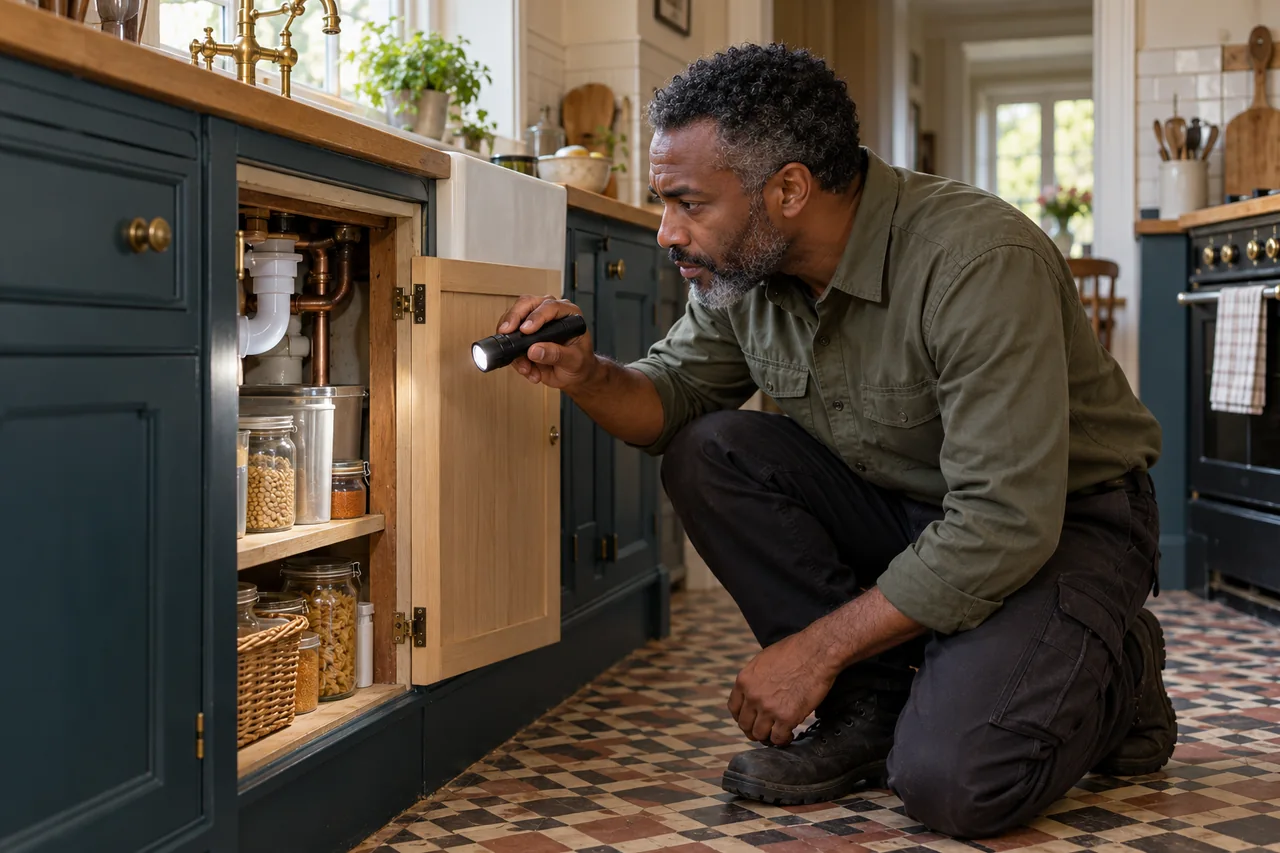
A mouse in the kitchen is a reason to investigate the routes behind the sighting. Discuss an inspection that connects fresh signs, concealed access and the way food is stored.
- Inspect gaps around kitchen service pipes
- Separate mouse evidence from other small mammals
- Trace activity between cupboards and hidden voids
- Discuss secured control points and monitoring
- Sequence proofing around the findings
URGENT ENQUIRY
Mice affecting your kitchen?
Describe fresh sightings, damaged food or activity spreading between rooms. Discuss an urgent assessment and check the next available appointment.
01 / ENQUIRY
Start with where the mouse appeared.
When you call about mice, describe the room, the time of the sighting and the route the animal seemed to take. Explain whether food packets have been chewed or droppings have appeared inside cupboards. Mention a recent kitchen installation, opened floorboards or building work next door if relevant. These details help an inspection begin in the right place without assuming every mouse sighting has the same source.
Tell the person arranging the visit about pets, young children and cupboards that cannot be opened. Explain any traps or products already placed, including their location and whether anything has been caught. Leave secured equipment alone until advised otherwise. If the animal is larger than expected, say so: the inspection may need to distinguish mice from rat activity, rather than relying on the name used during the call.
02 / EVIDENCE
Small marks need a connected explanation.
A specialist may compare droppings, gnawing, damaged packaging and rubbing marks with the reported sightings. A few old droppings do not establish the number of mice or prove that activity is continuing. Photos can help preserve what you noticed before ordinary cleaning, but you should not handle droppings or open a concealed void to collect evidence. The aim is to identify a likely animal and decide where further checking is useful.
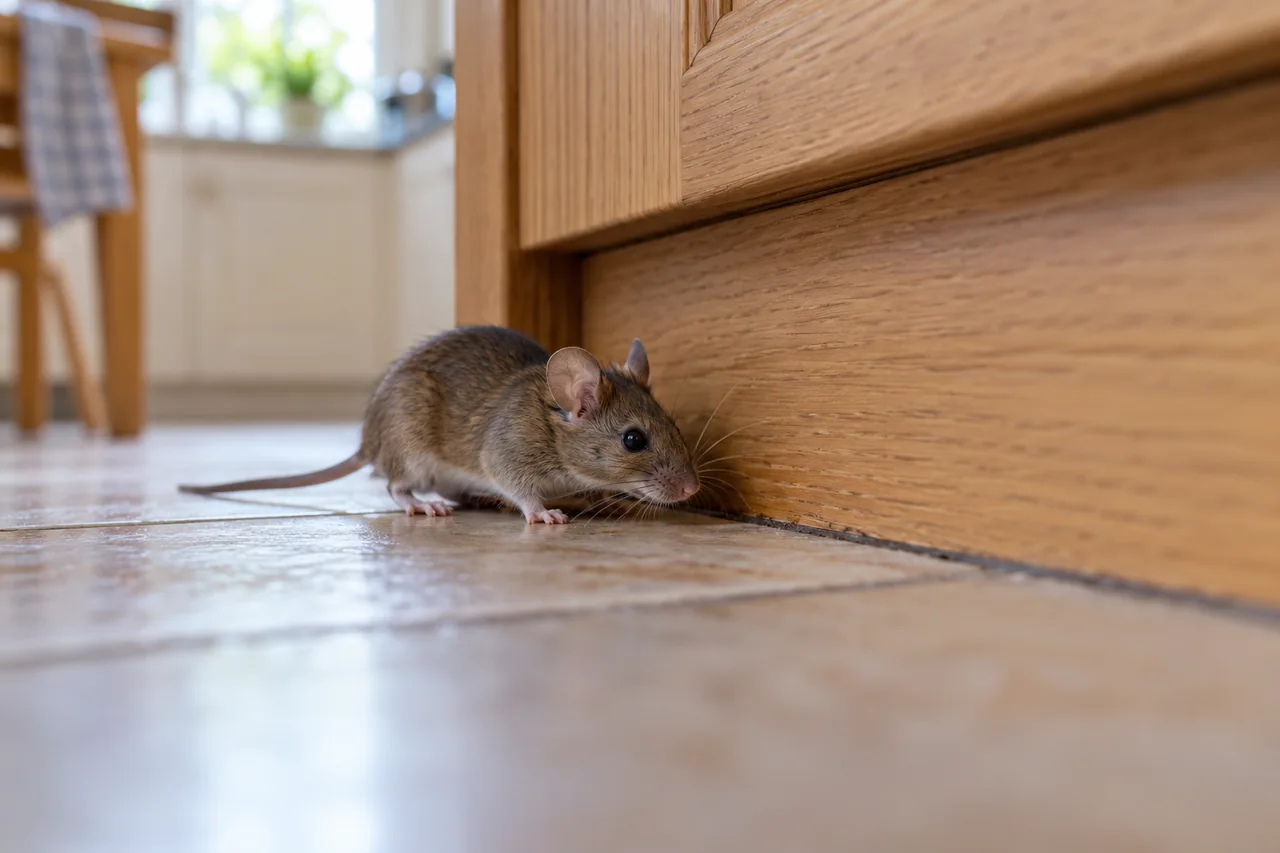
House mice can use very small openings, while outdoor mouse species may enter under different circumstances. A clear sighting, a suitable photograph or evidence examined during the visit can help identification. If the signs do not support a mouse diagnosis, that uncertainty should be explained before control is proposed. Noises above a ceiling may also justify discussing inspection of roof-space activity instead of treating every sound as a mouse.
| Finding | What needs checking | What it cannot establish alone |
|---|---|---|
| Chewed packet | Nearby food access and travel route | Number of mice |
| Droppings in a cupboard | Location, condition and other signs | Current activity without assessment |
| Gap beside a pipe | Connection to a concealed space | Whether the gap is being used |
03 / INSPECTION
Follow the route behind the cupboard.
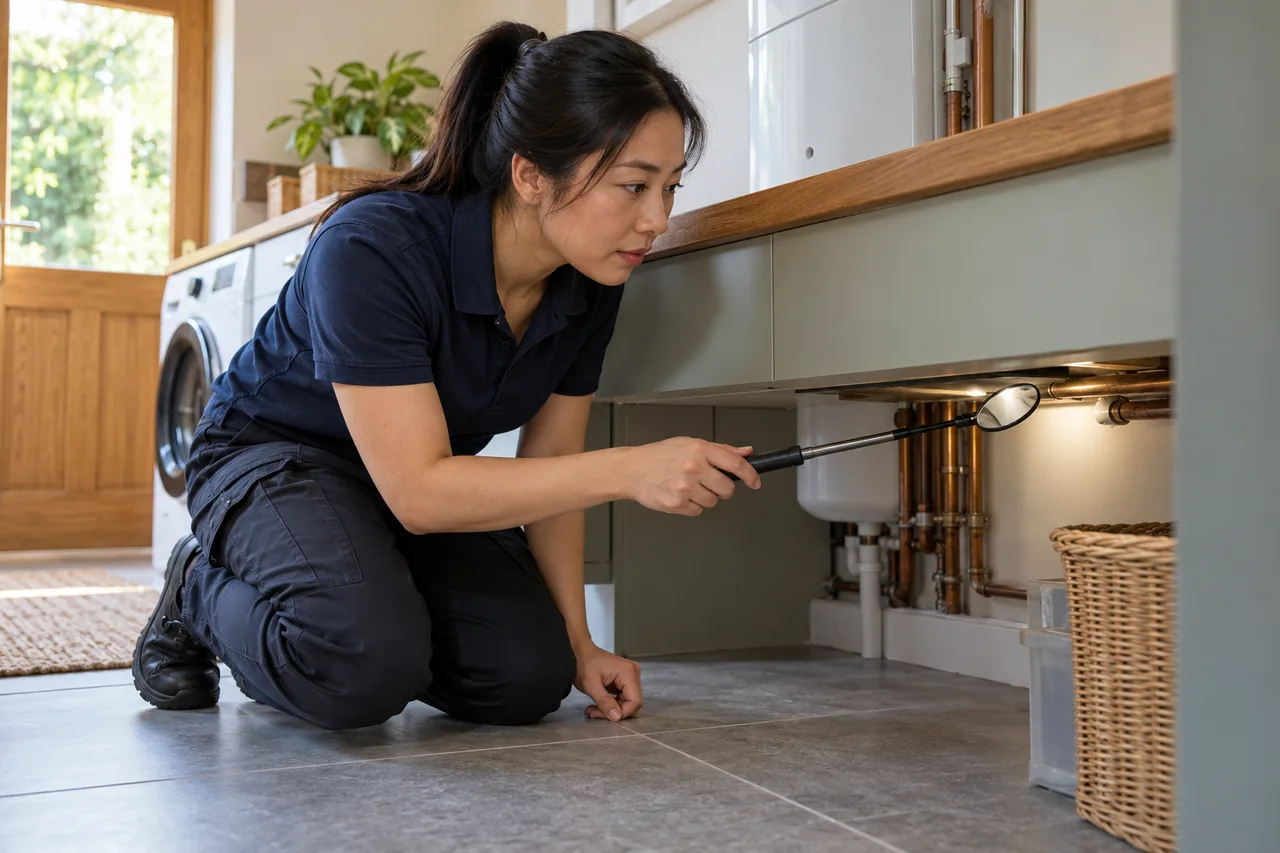
Inspection commonly begins around the affected kitchen or utility area, considering accessible cupboard bases, pipe penetrations, appliance recesses and adjoining storage. The specialist can explain which spaces are visible and which remain concealed. A fixed cabinet or an inaccessible floor void limits what can be concluded. Opening fitted units, lifting floors or moving heavy appliances should not be assumed to form part of an ordinary inspection.
The route matters as much as the point where a mouse was seen. A gap behind the sink may connect to another room or a shared service route. The inspection should consider that possibility without claiming to inspect neighbouring premises. In a flat, clarify who can authorise access to communal areas. Record repairs that need a landlord or another trade, so treatment inside one cupboard does not become a substitute for investigating continued access elsewhere.
04 / PLAN
Choose control around the evidence.
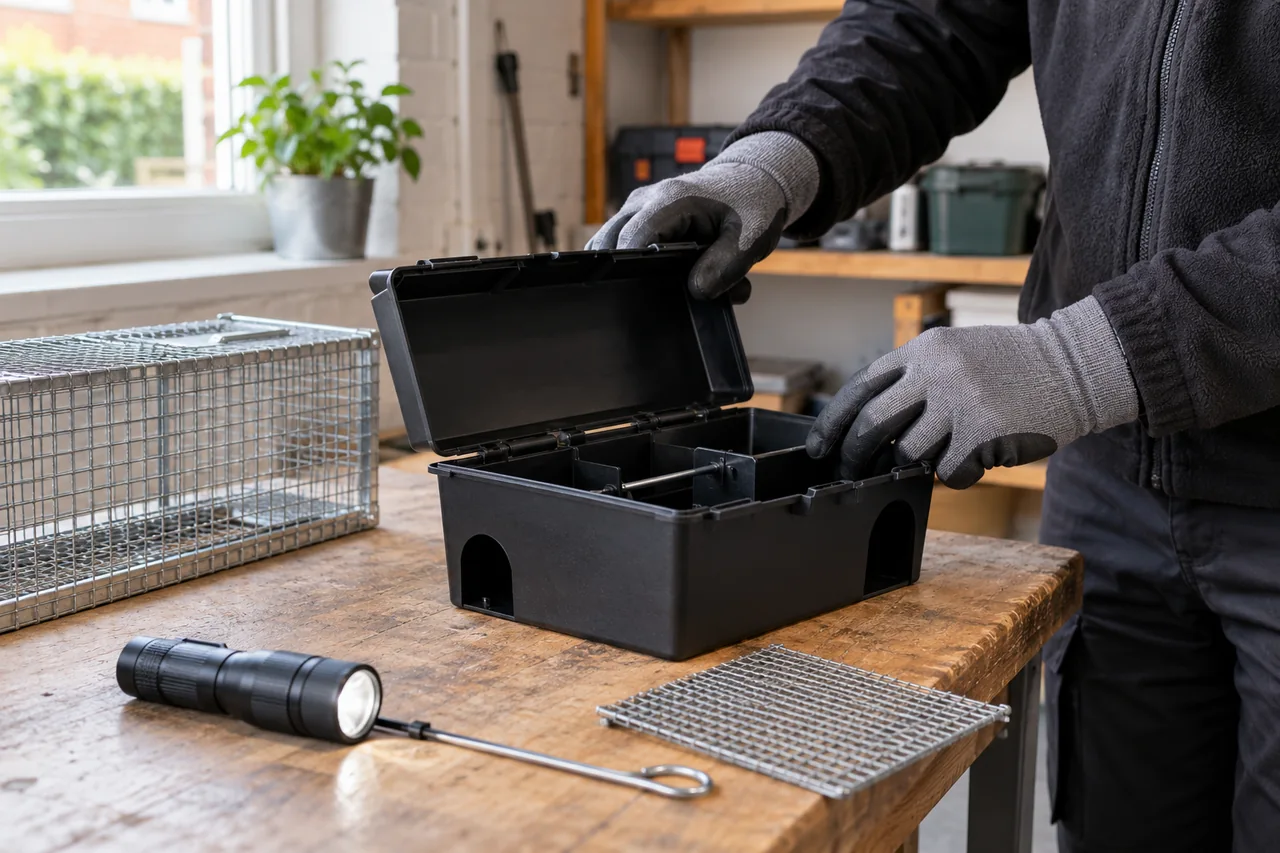
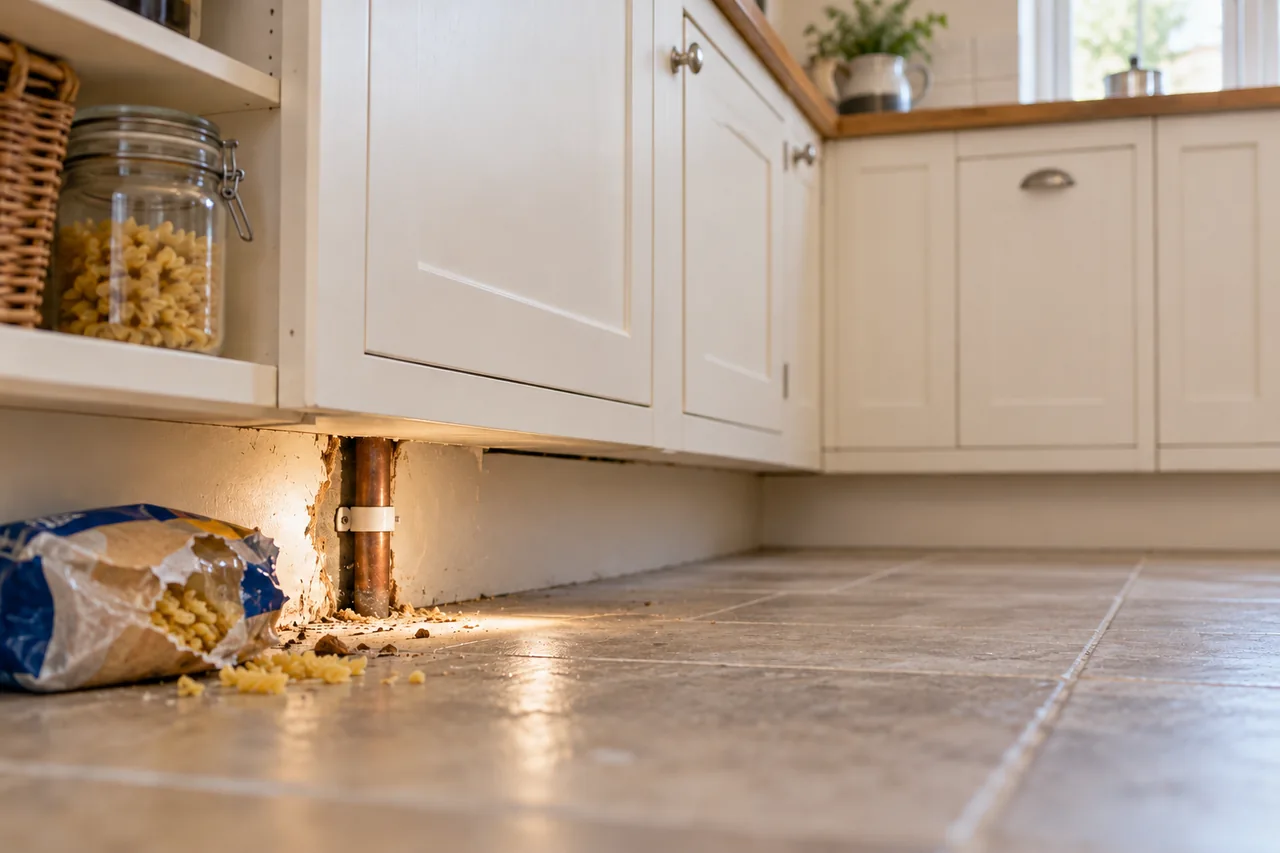
Monitoring, trapping, secured baiting and physical exclusion are possible elements of professional mouse management. Which, if any, is suitable depends on identification, accessible routes, the property and risks to occupants or other animals. Ask which method is actually being proposed, where equipment would sit and how it would be checked. A photograph of equipment on this page illustrates a possible working situation; it does not confirm the method that will be used in your home.
A useful plan separates immediate control from longer-term repairs. Some openings may be suitable for proofing, while other routes need more investigation or careful timing. Filling every visible gap before the position is understood can make further checking harder. Ask what the specialist expects each action to achieve and how progress will be measured. The number of visits should reflect the observed activity and proposed monitoring, rather than an unexplained promise that one application will end the problem.
05 / EQUIPMENT
Know where equipment will be placed.
A torch and inspection mirror can help examine accessible corners without dismantling the kitchen. Monitoring or control equipment, where selected, needs positioning that reflects mouse movement and household access. Secured points may be appropriate where children or pets use the room. Confirm what the equipment is for, who will check it and when it should be removed. Do not open a station or move a trap to a more convenient position yourself.
The specialist should explain the locations used during the visit and any areas left inaccessible. Where a product is proposed, its application and precautions must follow the relevant directions. There is no reason to add a second product independently while a plan is being monitored. Tell other occupants and cleaners which points must remain undisturbed, and keep any written notes available rather than relying on remembering a verbal description of several cupboard locations.
06 / PREPARATION
Make kitchen access useful, not disruptive.
Before the appointment, ask which cupboards or work areas need to be accessible. Clear a safe route and explain heavy appliances, fragile pipework or locked rooms. Protect food as advised, but avoid moving an entire pantry into an unaffected room without discussing the signs first. Do not sweep out droppings simply to make the cupboard look ready; ask how evidence and any contamination should be dealt with safely.
During the visit, keep children and pets away from the work area. Tell the specialist about stored pet food, bowls left overnight and places where an animal could reach proposed equipment. In shared accommodation, ensure the person providing access can explain activity reported by other occupants. A brief room-by-room account is more useful than several people placing different products without telling one another.
| Before access | Discuss with the specialist |
|---|---|
| Kitchen cupboards | Which bases and pipe routes need clearing |
| Pets and children | Separation from equipment and work areas |
| Existing traps | Their locations and results |
| Fixed appliances | Safe limits on moving or dismantling |
07 / REVIEW
Monitoring turns sightings into a record.
After work begins, note the date, room and type of any fresh sign. A sighting beside the same cupboard and damage in a different room are different observations. Share both at the agreed review rather than altering equipment to chase each new sign. The specialist may compare your notes with monitoring results and decide whether the route, method or proposed repairs need to change. A period without sightings is useful information, but it should be considered alongside the rest of the evidence.
Follow-up may involve checking control points, reviewing remaining activity or considering another accessible route. Ask whether those visits are included and what would lead to additional work. Once control equipment is no longer needed, confirm who removes it. If activity resumes later, explain when it returned and whether building work, food storage or nearby conditions have changed. That gives the next assessment a clearer starting point than repeating a previous treatment without reviewing the cause.
08 / PREVENTION
Proofing needs to match the opening.
Longer-term prevention may involve appropriate repair of gaps, attention to door thresholds and changes to accessible food storage. Materials should suit the opening and the building, including ventilation requirements. Ask which repairs are priorities and whether they are part of the agreed work or require another trade. A kitchen can look tidy while still offering concealed access through a service route, so cleaning alone should not be presented as a complete solution.
Keep dry food and animal feed in suitable closed containers, review waste storage and inspect repaired points periodically. In a business, explain delivery storage and areas used outside normal opening hours. For an overview of how inspection and aftercare fit together, see the overview of inspection and aftercare. When calling again, keep the earlier findings and repair notes to hand so the next conversation builds on what was actually established.
09 / QUOTE
Agree the visit and the mouse-specific work.
A mice-control quote depends on the affected areas, access to likely routes, the proposed control method, monitoring visits and any proofing included. A small visible opening and a difficult shared void can involve very different work. Ask for the number and purpose of visits, any exclusions and the total including applicable charges. A quotation should distinguish inspection and monitoring from repairs that need separate access or another trade.
If mice are affecting food preparation or activity is spreading between rooms, describe that when asking about availability. Do not assume an urgent call confirms a same-day appointment. Keep exposed food protected and avoid handling contaminated materials while waiting for specific advice. Use Contact Us to discuss the signs, access and the next suitable appointment.
QUESTIONS ABOUT MICE CONTROL
Before arranging the visit.
Can one mouse sighting justify an inspection?
Yes. Describe the exact location and any other signs. An inspection can help establish whether it was an isolated entry or part of wider activity; the sighting alone does not establish how many animals are present.
Should I block the hole behind my sink now?
Photograph it if accessible and discuss it before sealing. The opening may be part of a larger route. Its use, suitable repair material and the timing of closure should be considered with the findings.
Can the specialist check beneath fitted cupboards?
Accessible bases and gaps can be examined, but fixed cabinetry may limit the view. Ask what access is included. Dismantling units or moving heavy appliances requires separate discussion and should not be assumed.
Does having a cat rule out a mouse problem?
No. Explain what your cat has caught or brought inside, but do not use that as the only evidence. Pet access also affects where any monitoring or control equipment can safely be positioned.
Why might a mouse visit need follow-up?
A further visit may review fresh signs, monitoring results or another suspected route. Confirm its purpose and whether it is included. Progress should be judged from the evidence rather than a fixed countdown.
Will proofing be included in the quote?
Ask which openings can be addressed and what is excluded. Small accessible repairs and work involving floors, shared service routes or damaged building fabric may need different arrangements and permissions.
DISCUSS MICE CONTROL