
UXBRIDGE / FLEA TREATMENT
Flea Treatment Uxbridge
Flea activity needs a plan for the rooms as well as any animal host. Discuss the evidence, soft furnishings and preparation, with pet care kept separate from treatment of the property.
- Assess carpets beside pet resting locations
- Check jumping insects before attributing bites
- Consider hidden stages within room furnishings
- Coordinate household preparation with veterinary care
- Interpret fresh adult sightings at the agreed review
URGENT ENQUIRY
Flea activity affecting occupied rooms?
Explain the rooms involved, recent sightings and household pets. Call to discuss an assessment and how to prepare without moving the problem elsewhere.
01 / ROOM CONDITIONS
Start with the places where activity is noticed.
Describe which rooms are affected and where insects appear: beside a pet bed, along a sofa edge or in a previously unused carpeted space. Explain whether pets currently live there, whether an animal has recently left and whether the property stood empty. Fleas can involve stages in the environment, so a home without a current pet should not be ruled out solely on that basis. The inspection needs a room history as well as a description of the insect.
Soft furnishings, floor edges and resting areas can help focus the assessment, but their presence does not prove flea activity. Skin marks alone are not an identification. If the problem seems centred on a bed and insects are crawling rather than jumping, say so; bed bug inspection asks different questions. Avoid diagnosing a biting insect from a symptom or applying multiple products while the cause remains uncertain.
02 / FLEA PREPARATION
Agree how bedding and floor access will be handled.
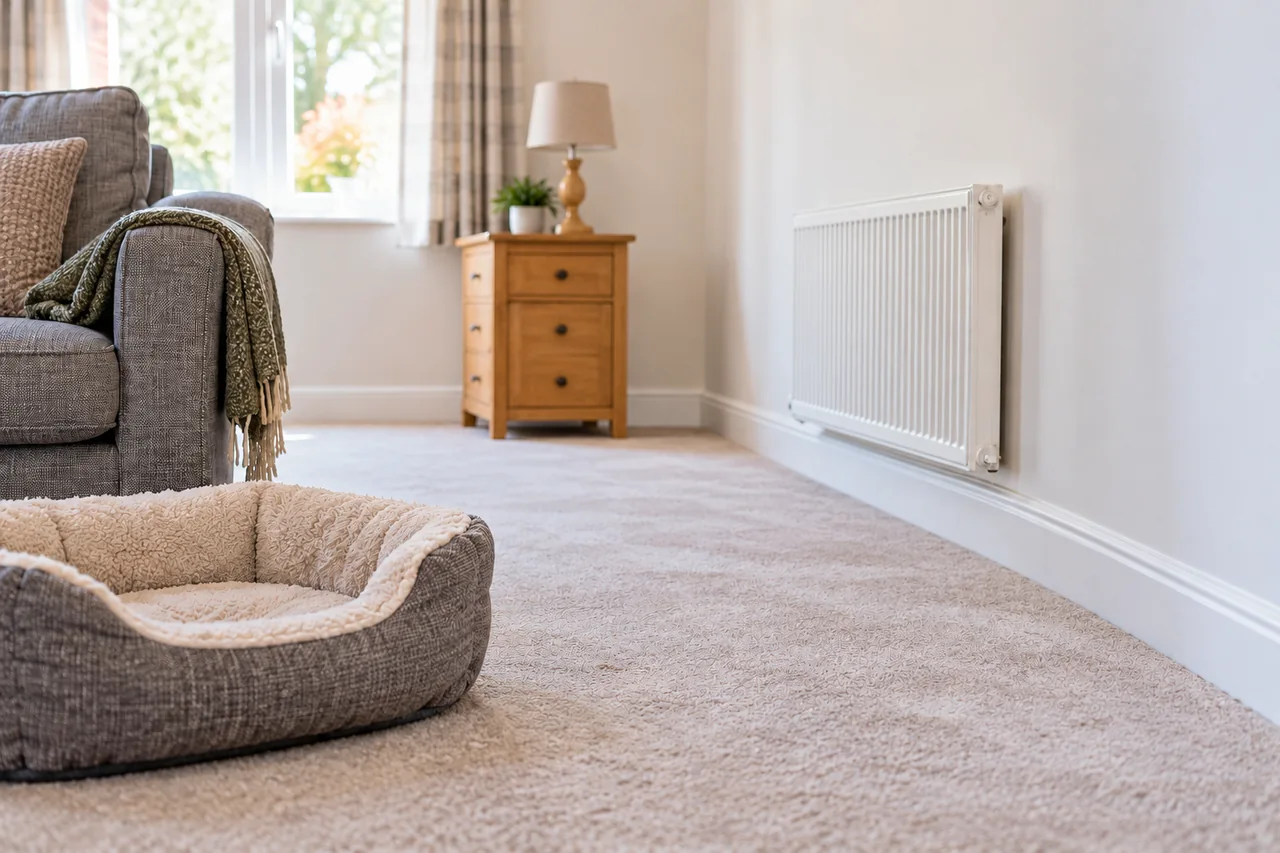
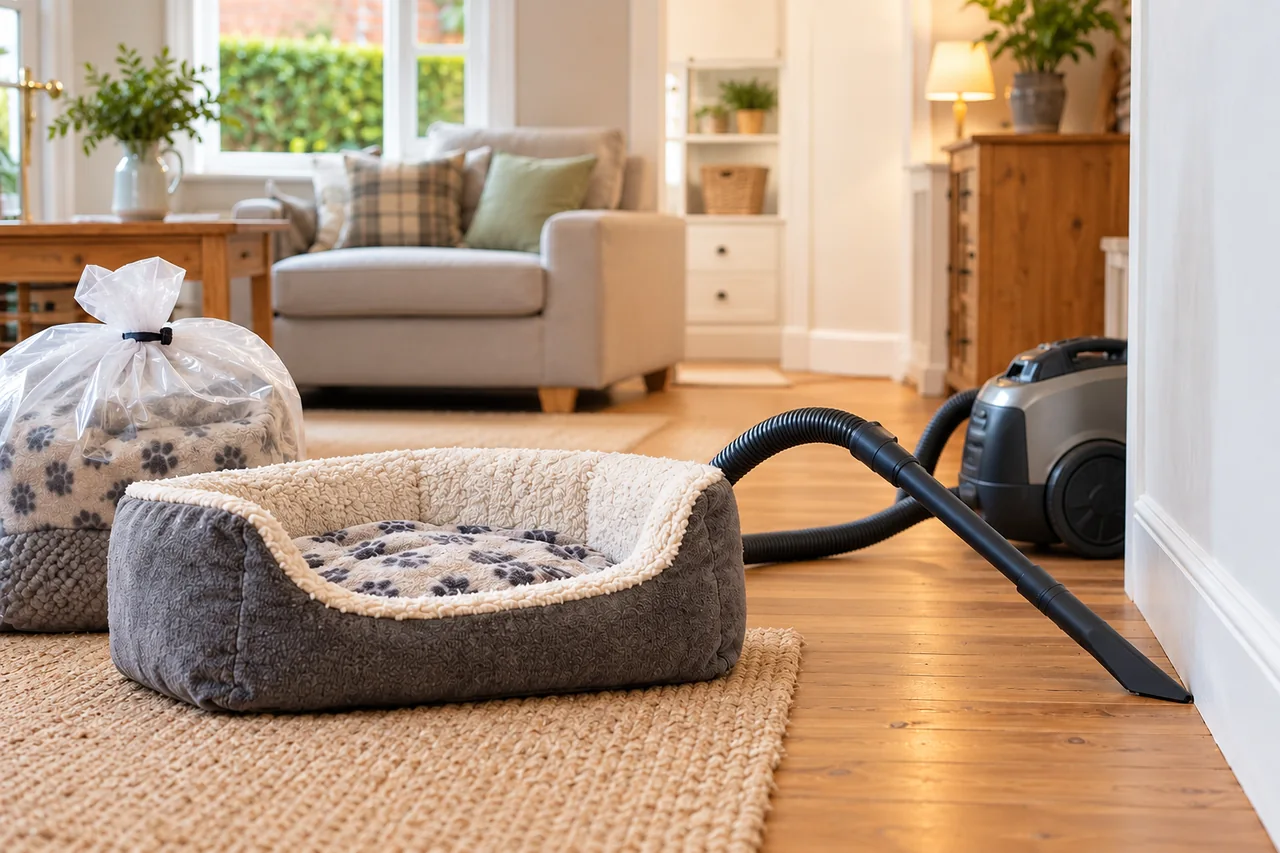
Before the appointment, ask how the affected floors and soft furnishings should be prepared. The instructions may address access, vacuuming and contained handling of suitable washable items, but they must fit the selected method. Do not assume the same cleaning routine is appropriate before and immediately after treatment. Explain delicate surfaces, heavy furniture and belongings that prevent access to the edges where activity has been reported.
Pet bedding needs particular discussion because moving it through other rooms can complicate preparation. Keep track of what has been cleaned and where it is placed afterwards, following the agreed instructions. If animals need veterinary flea care, arrange that through a qualified veterinary professional rather than use a room treatment on them. Household and pet arrangements may need coordination, but the products and advice for those two purposes are not interchangeable.
| Preparation point | Question before the visit |
|---|---|
| Carpet and floor edges | What access or cleaning is requested? |
| Pet bedding | How should suitable items be handled and contained? |
| Resident animals | What veterinary care needs coordination? |
| After treatment | Which cleaning restrictions will apply? |
03 / IDENTIFY THE INSECT
Confirm fleas from evidence, not an assumption about pets.
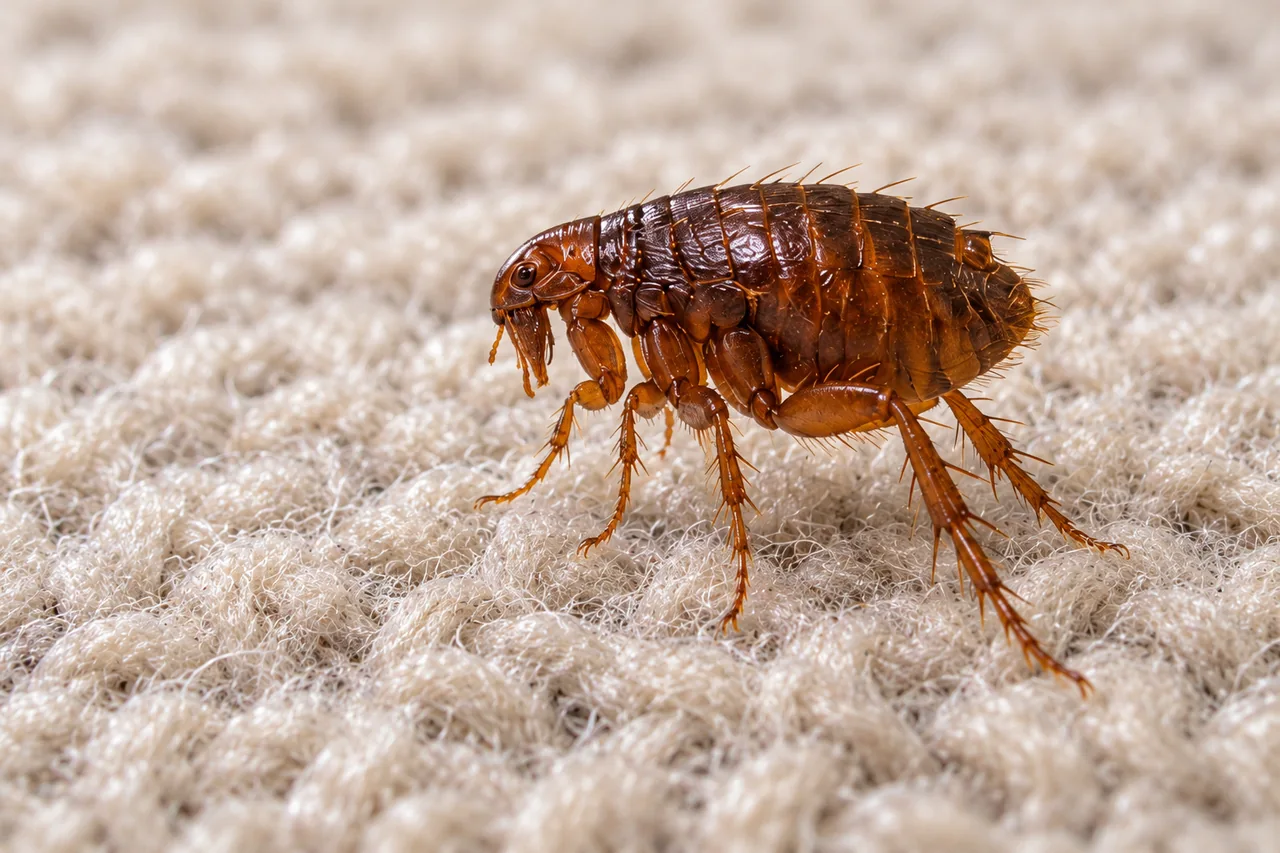
A specialist may examine a suitable insect, a clear photograph or other accessible evidence to decide whether fleas are involved. Adult fleas are small, wingless insects capable of jumping, but many tiny insects found on a floor have another explanation. Describe movement, location and timing without trying to force a diagnosis. If only marks on skin have been noticed, explain that limitation so the appointment can begin as an assessment rather than a presumed treatment.
The inspection should relate any confirmed flea evidence to the rooms and resting areas involved. An animal scratching is useful context but does not replace veterinary assessment, and finding insects in one room does not establish the extent throughout the property. Ask which observations support the identification and whether another area needs checking. A clear answer helps preparation focus on the affected environment, without treating every textile or room simply because a household has pets.
04 / INSPECTION EXTENT
Map the activity around furnishings and floor edges.
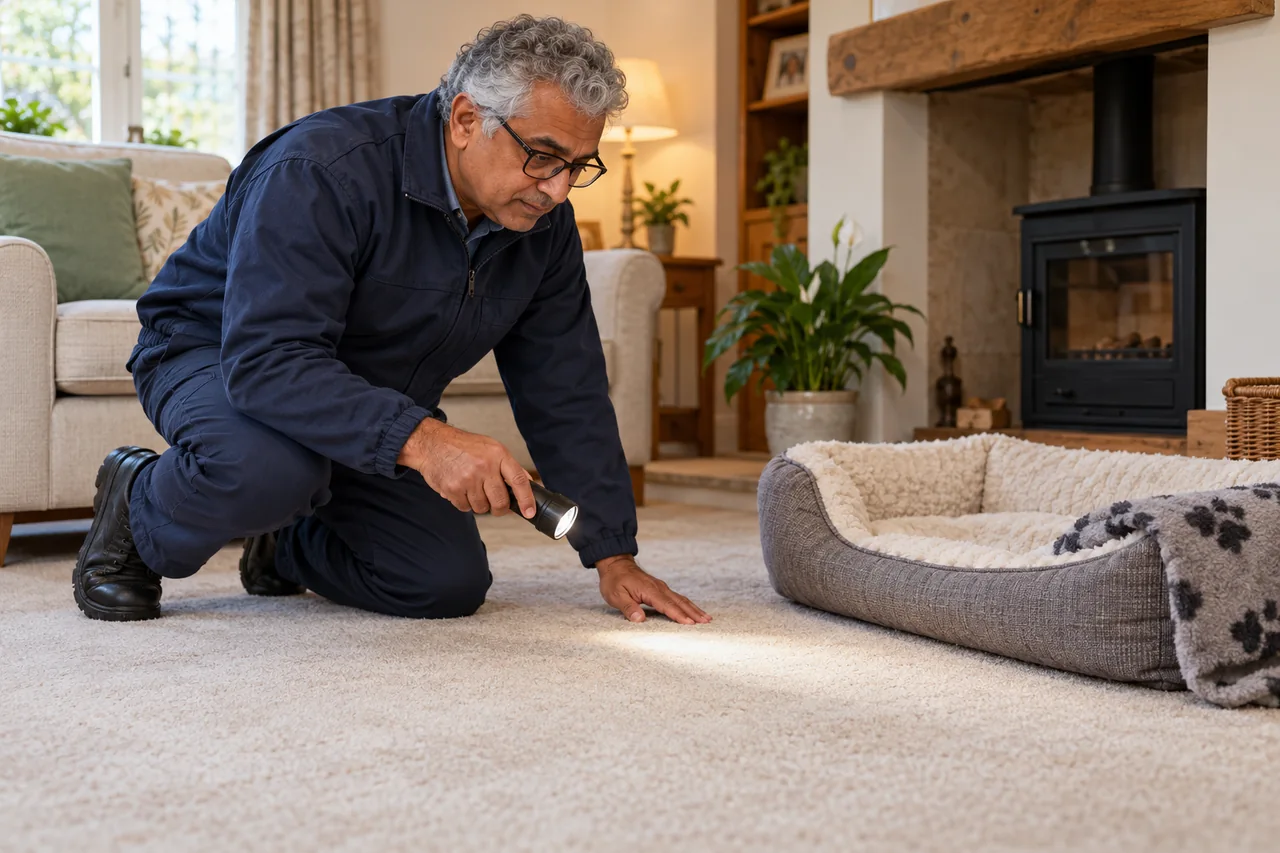
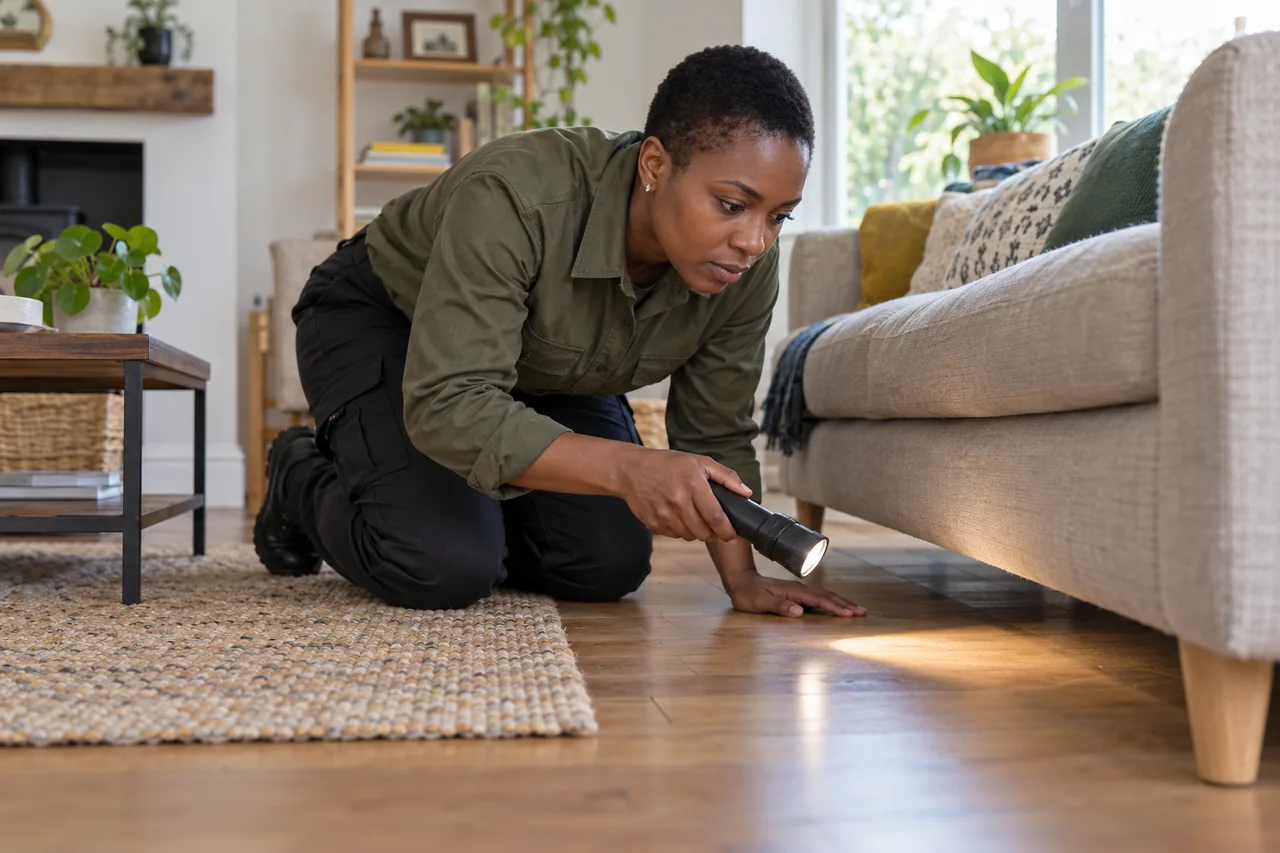
An accessible inspection may consider carpets, skirting edges, upholstered resting areas and the locations where pets spend time. Explain rooms used by former occupants or spaces reopened after a period of vacancy. Those details may affect interpretation of the pattern. A torch or other suitable inspection equipment can help examine relevant edges, but heavy furniture or concealed flooring can limit access. Ask what the proposed visit can check without lifting materials or dismantling furnishings.
The purpose is to assess distribution and conditions supporting the problem, not to promise a precise count of every hidden stage. Record uninspected areas and agree whether further access is necessary. In a rented home, clarify who can authorise movement of furniture or work on supplied soft furnishings. If the evidence is instead bristly larvae and fabric damage, discuss carpet beetle identification; that is a different problem from fleas in a resting area.
05 / FLEA TREATMENT CHOICE
Choose a property treatment with a clear review plan.
Depending on the findings, professional flea management may involve suitable treatment of identified room areas alongside preparation and attention to animal hosts. The particular method and product, if any, need confirmation for the property. Ask which surfaces are included, how household access will be managed and what aftercare applies. A photograph of preparation equipment does not establish the treatment used, and no universal room application is confirmed here.
Hidden life stages can affect what is observed after work. Discuss how continuing adult sightings will be interpreted and when a review would be useful. The plan should explain the next assessment rather than suggest that every sighting requires immediate additional spraying. Where veterinary care forms part of resolving the wider problem, confirm how it is coordinated without the pest provider prescribing or substituting a treatment intended for the animal.
| Part of the plan | What should be clear | Review focus |
|---|---|---|
| Room treatment | Affected surfaces and restrictions | Whether activity changes in those areas |
| Preparation | Handling and cleaning instructions | What was completed or could not be done |
| Animal hosts | Separate veterinary arrangements | Whether a continuing source is addressed |
| Follow-up | Purpose, timing and cost | Fresh evidence and remaining conditions |
06 / DURING THE VISIT
Keep people, animals and products in the right roles.
Before work begins, explain changes in room use, pet arrangements or preparation since the enquiry. Confirm the proposed treatment and price. The specialist should be able to distinguish the areas inspected from any surface still inaccessible. Keep animals and occupants out of the relevant work spaces as instructed. Tell the provider about aquariums, sensitive household arrangements or any restriction that could make the proposed method unsuitable, so these can be addressed before application.
Follow the specific directions for re-entry, ventilation, surface contact and cleaning. A room treatment must not be used as an animal treatment, and a pet product should not be applied around the property as a substitute for the agreed plan. Keep notes accessible to other occupants or cleaners who may arrive later. If any instruction is unclear, ask before returning the animal or ordinary household activity to the affected area; do not rely on a waiting time found for a different method.
07 / EMERGENCE AND REVIEW
Report the pattern after treatment, not just the presence of an insect.
Keep a record of where and when further adult fleas are seen, particularly around rooms that were previously unused. Hidden stages and changes in room use can influence the pattern, so a fresh sighting needs interpretation alongside the method and treatment record. Do not automatically repeat an application or move pet bedding to another room to avoid the affected floor. Share the observations through the agreed aftercare route and follow the cleaning instructions already provided.
At review, the specialist may consider preparation, the treated areas, any inaccessible spaces and the arrangements for animal hosts. Ask which of these questions a further visit is intended to resolve and whether it is included in the quotation. If the pattern changes substantially or another room becomes affected, explain what has moved between areas. A clear account supports a targeted reassessment instead of repeatedly treating the same floor while a relevant source or access problem remains unaddressed.
08 / RESTING AREA MANAGEMENT
Make the aftercare practical for the household.
Once permitted by the treatment instructions, continue the agreed approach to relevant bedding, floor edges and furnishings. Keep cleaned and untreated items distinguishable where that is part of the preparation plan. Ask what routine checks are useful around the resting areas actually implicated in the inspection. Ordinary cleaning supports management, but it should not be presented as proof that every stage has been removed or that a future introduction cannot occur.
Retain the room history and treatment notes, especially if several occupants or a landlord are involved. The Uxbridge pest control overview explains how evidence and aftercare inform the next decision. If you report activity later, include changes in pets, room occupancy and movement of furnishings. Those practical details are more useful than repeating the original booking description without explaining what happened between treatment and the new observation.
09 / FLEA PRICING
A quotation needs the rooms and the preparation limits.
Flea-treatment pricing may depend on the affected area, floor and furnishing access, proposed method and review arrangements. Preparation or work involving landlord-owned furnishings may require coordination. Veterinary care is separate from property treatment and should not be assumed included. No fixed flea tariff is confirmed here. Ask for the treatment scope, follow-up purpose, full cost and exclusions before agreeing a visit, rather than relying on a comparison figure unrelated to your household.
If activity is disrupting use of occupied rooms, explain that when checking appointments. A request for urgent help does not confirm immediate attendance. Avoid moving affected bedding or adding another product without advice. Use Contact Us to describe the locations, pets and access, then discuss the next suitable assessment and the preparations that would make it useful.
QUESTIONS ABOUT FLEA TREATMENT
Before arranging the visit.
Can there be fleas in a property without current pets?
Yes, the assessment should consider previous animals, room history and environmental evidence. The absence of a current pet does not identify or rule out the insect. Report what is seen and where it appears.
Does a flea appointment treat my dog or cat?
Property pest treatment is separate from veterinary care. Discuss any animal-host concern with a qualified veterinary professional, and coordinate that advice with the household plan. Do not apply room-treatment products to an animal.
Should I vacuum immediately after flea treatment?
Follow the specific aftercare directions. Cleaning at the wrong time may affect a treatment, while preparation may require a different routine. Ask what applies to the actual surfaces and method rather than assume a universal instruction.
Do more adult sightings automatically mean the treatment failed?
Not necessarily. The timing, location, hidden life stages and method all affect interpretation. Record the pattern and discuss it at the agreed review instead of immediately adding another product or moving furnishings elsewhere.
Can bites alone confirm a flea infestation?
No. Skin marks are not enough to establish the insect. A suitable sample, clear sighting or inspection evidence is needed to guide identification and distinguish fleas from other possible causes around sleeping or resting areas.
What if heavy furniture blocks the carpet edge?
Explain that access limit before the visit. Ask what can be assessed safely and whether movement needs separate arrangements. Do not attempt heavy lifting merely to make an area available for inspection.
DISCUSS FLEA TREATMENT