
UXBRIDGE / BED BUG TREATMENT
Bed Bug Treatment Uxbridge
Establish what is in the sleeping area before deciding how to treat it. Discuss bed-frame inspection, careful handling of belongings and a response suited to the evidence in each room.
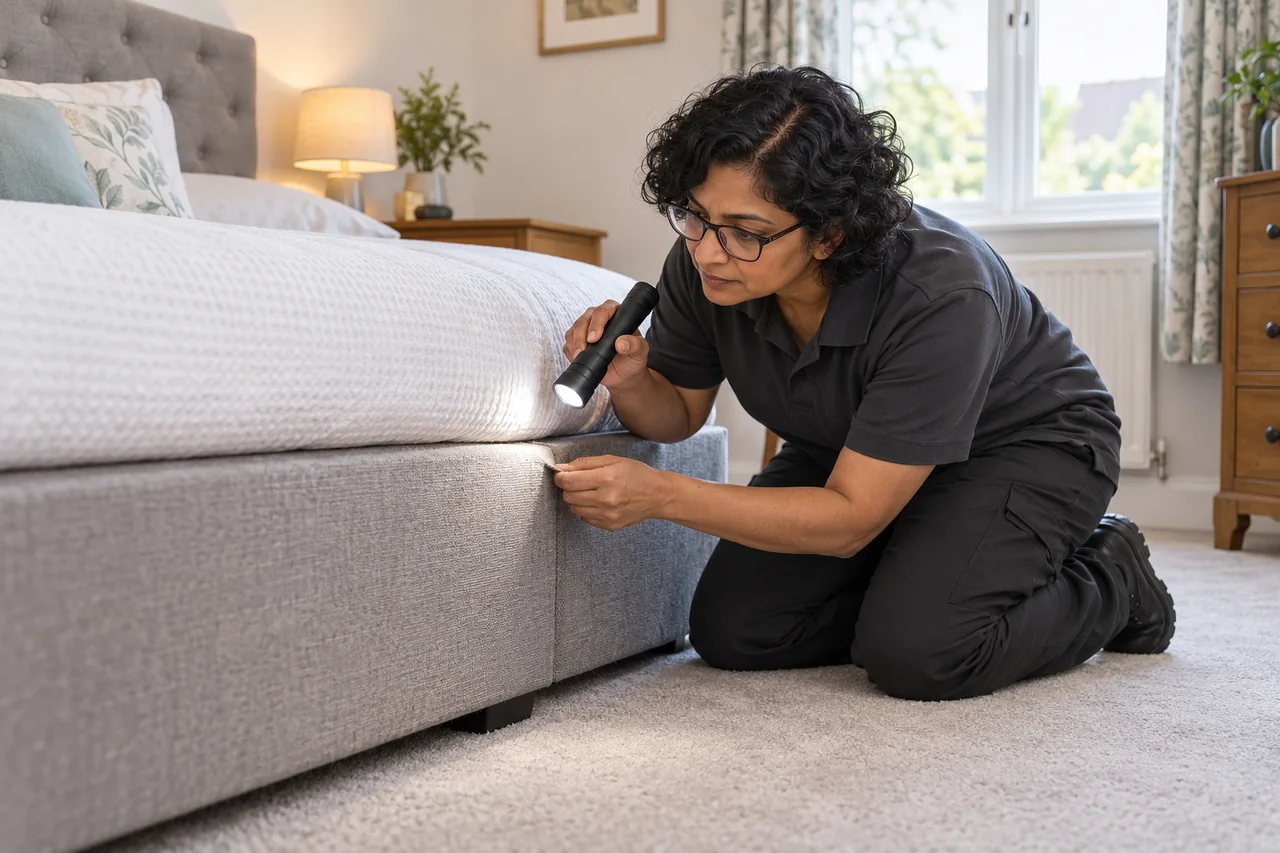
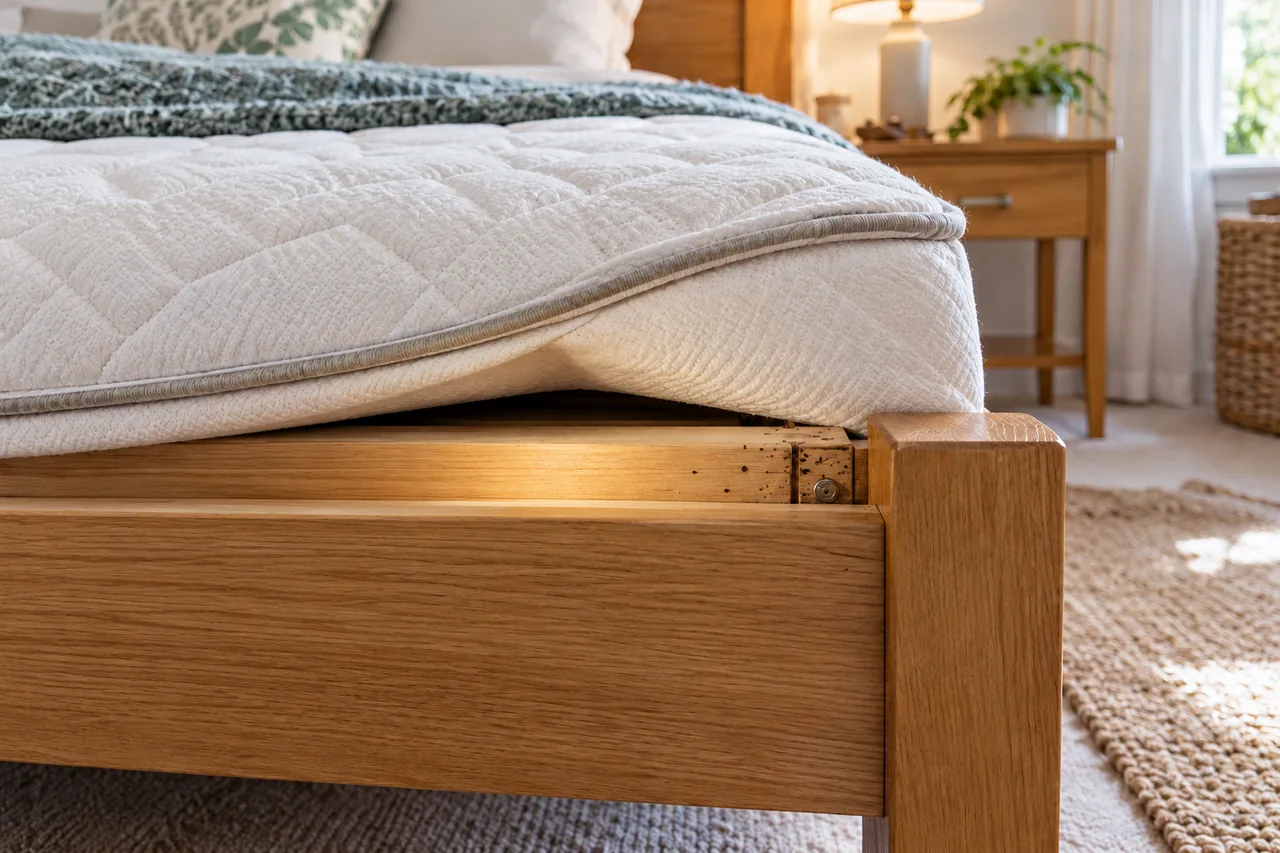
- Examine mattress seams and bed-frame joints
- Check headboards and nearby upholstered furniture
- Assess evidence beyond bite marks alone
- Plan bedding movement before preparation starts
- Review fresh signs after the agreed treatment
URGENT ENQUIRY
Suspected bed bugs disrupting your sleep?
Describe the signs and affected sleeping areas. Call to discuss an inspection and preparation before moving bedding or belongings between rooms.
01 / SLEEPING AREA ENQUIRY
Describe the room, not only the bites.
An enquiry is more useful when it describes the sleeping area and visible evidence. Explain where insects or marks were found, which beds are used and whether belongings have recently moved between rooms. Recent travel, second-hand furniture or a change of occupants may be relevant, but none of those details proves where an infestation began. The inspection needs to establish what is present now, rather than assign a cause from a short telephone account.
Skin marks alone cannot confirm bed bugs. If insects seem to jump or activity centres around a pet resting area, mention that distinction; flea assessment considers different signs and conditions. A photograph of a visible insect can help if taken without spreading belongings or disturbing furniture. Explain any spray, smoke product or cleaning already attempted, because it may affect the interpretation of signs and the next treatment decision.
02 / BEDBUG IDENTIFICATION
Look for a combination of evidence.
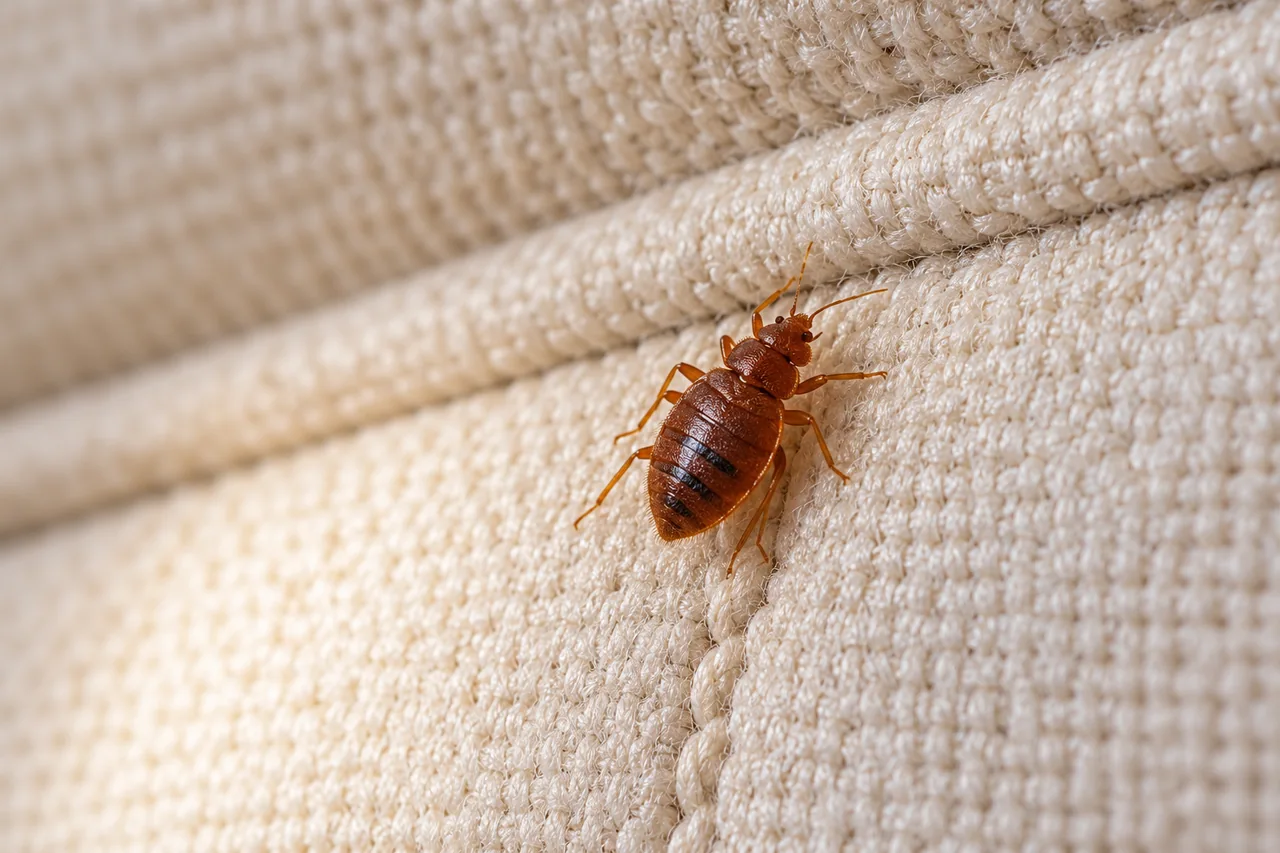
A specialist may examine visible insects, shed skins, marks at seams and evidence around bed-frame joints. Adult bed bugs have a flattened oval form, while smaller stages can be harder to see. Identification should consider a suitable sample or clear evidence, rather than assume every reddish mark on bedding is caused by the same insect. Ask which findings support the diagnosis and whether anything remains uncertain before treatment is recommended.
The position of evidence helps shape the room assessment. A finding at the headboard may justify checking adjoining joints and nearby furniture, while signs on an occasional-use sofa should be discussed separately from the main bed. Avoid moving furniture into another bedroom to make inspection easier. Keeping track of where each item came from helps the specialist assess spread and prevents the inspection from losing the relationship between an object and its original location.
| Evidence | Where it may be checked | Decision supported |
|---|---|---|
| Visible insect | Mattress piping or frame joint | Species identification |
| Cast skins or seam marks | Headboard and nearby upholstery | Inspection of related harbourage |
| Reported bites only | Sleeping arrangements and other evidence | Further identification before treatment |
03 / BEDROOM INSPECTION
Inspect the bed as a set of hiding places.
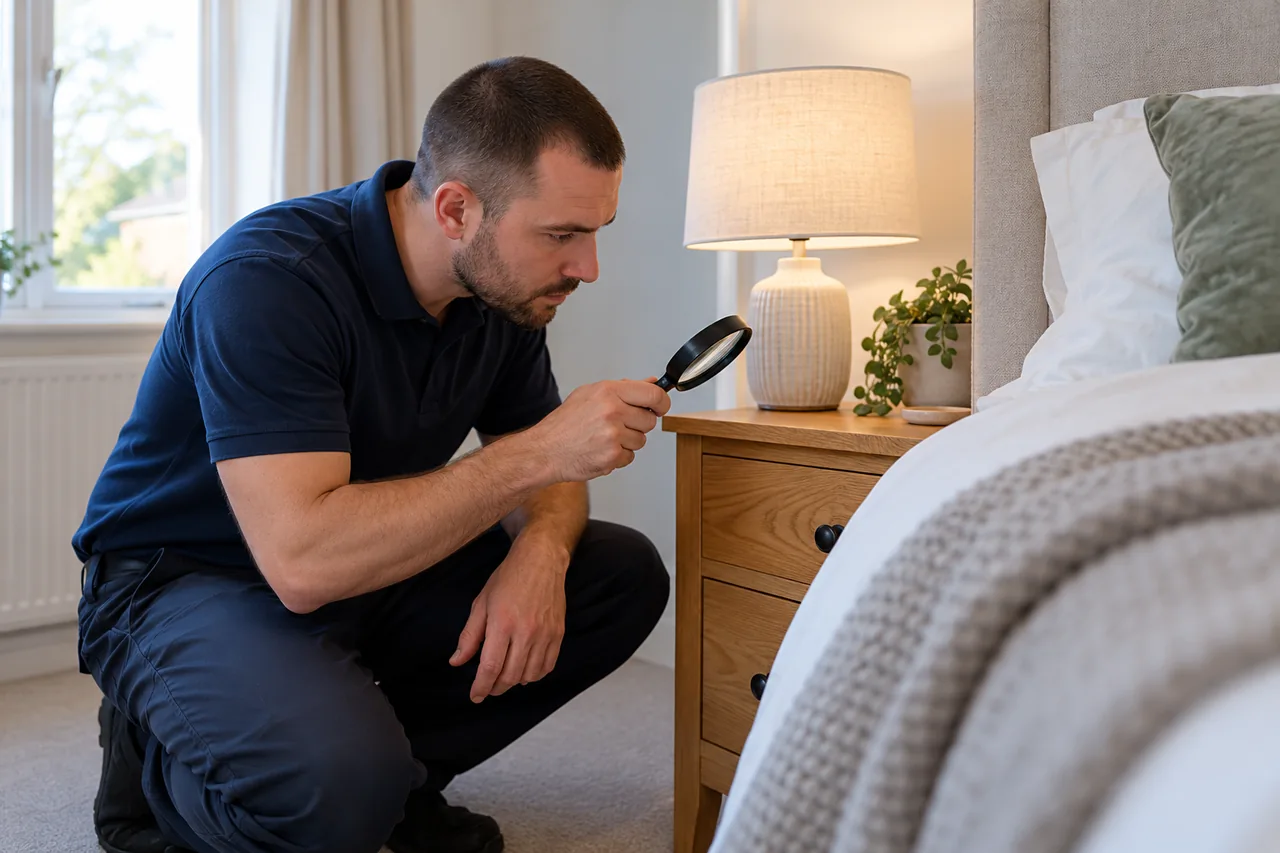
The bed is more than the top surface of the mattress. Accessible frame joints, fixings, headboard edges and nearby furniture can provide places worth examining. A torch and magnification may help assess small signs. The inspection should be planned around safe access, including heavy divan bases or fixed headboards. Ask what can be checked without dismantling and whether anyone needs to help provide access to a component that cannot be moved safely by one person.
Explain where people rest as well as where they sleep overnight. A sofa, spare bed or upholstered chair may be relevant, but that does not automatically mean every room requires treatment. The specialist should explain the areas inspected, those that could not be reached and why another space might need checking. A room-by-room record makes the proposed treatment more concrete than a promise to spray the whole property regardless of the findings.
04 / CONTAINED PREPARATION
Prepare without carrying the problem elsewhere.
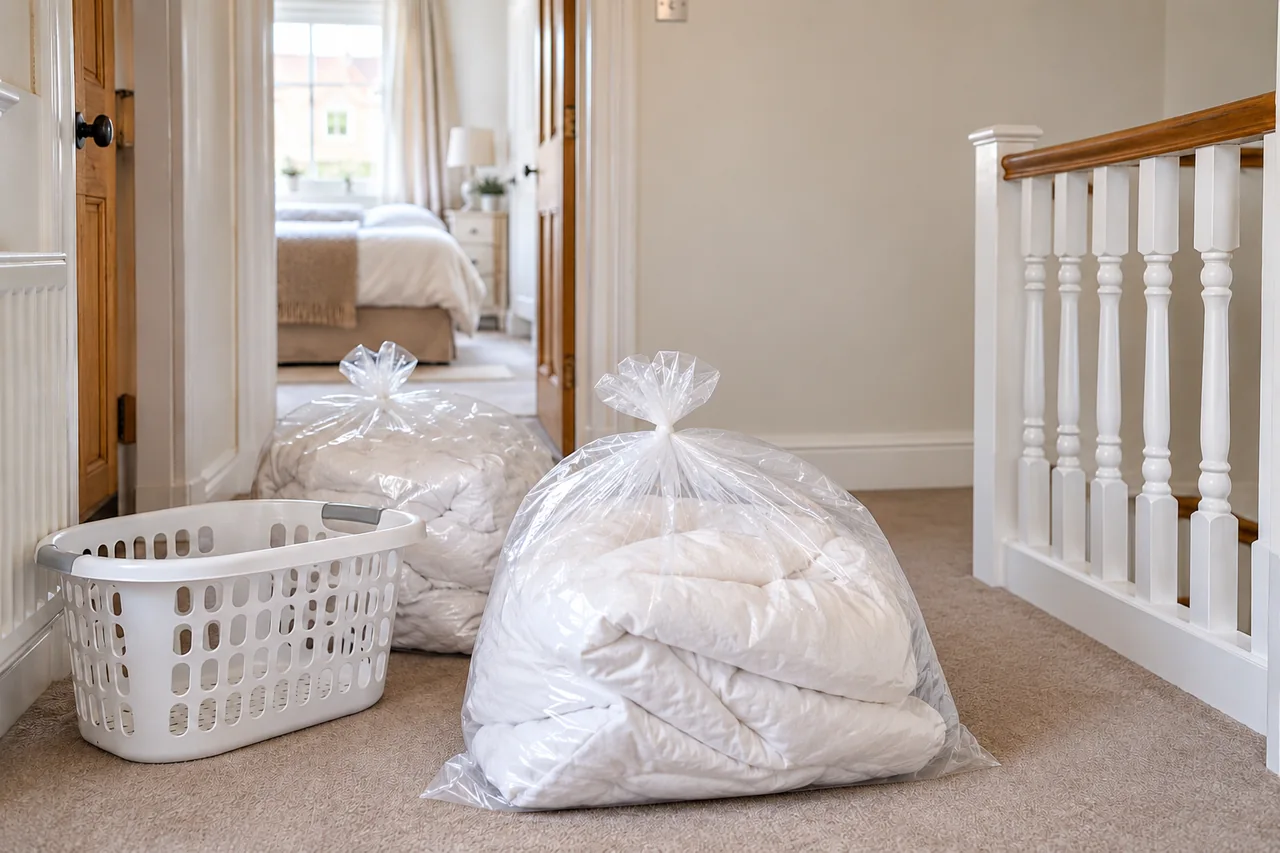
Wait for the preparation instructions before taking bedding through the property or emptying drawers into another room. Bagging, handling and cleaning need to fit the identified problem and proposed method. Explain delicate fabrics and items that cannot be washed or heated. There is no useful universal instruction to put every possession through the same process. The aim is to make relevant areas accessible while retaining control over where belongings are moved.
Ask how beds should be left for inspection, which storage needs opening and whether loose items should stay in place until examined. Avoid disposing of a mattress merely to prepare for a visit: replacement can fail to address insects elsewhere in the room. If heat is being considered, the preparation is a separate technical discussion; see bed bug heat treatment for questions about contents, access and temperature monitoring.
05 / METHOD CHOICE
Connect the chosen method to the room findings.
Professional bed bug management can consider physical measures and suitable treatment methods, sometimes in combination. The actual proposal should explain why the method fits the evidence, accessible harbourage and the way each room is used. No particular product or application technique is confirmed here. Ask what will be done around the bed and furniture, what cannot be reached and whether preparation or monitoring needs to happen before another step is agreed.
A method should also come with a way to assess its outcome. Insects concealed in furniture, untreated items moved into the room or incomplete access can all affect what happens next. Discuss these limits before work begins, not only after signs are reported again. The quotation should identify the areas included and how follow-up is arranged. A single application or a new mattress should not be presented as a guaranteed solution without considering the wider room.
| Treatment question | Why it matters | What to confirm |
|---|---|---|
| Which rooms and items? | Defines the proposed scope | Beds, upholstery and exclusions |
| Which method? | Changes preparation and precautions | Actual work planned for the findings |
| Which restrictions? | Depends on the treatment used | Access, cleaning and re-entry instructions |
| Which review? | Checks continuing evidence | Timing, observations and included visits |
06 / DURING TREATMENT
Keep the visit organised around access and precautions.
At the appointment, explain any changes since the enquiry, including new rooms affected or belongings moved. The specialist can then compare those changes with the inspection. Confirm the work and price before authorising treatment. Keep people and pets out of the relevant work areas as instructed. Tell the specialist about household needs that could make temporary restrictions difficult, so they can be discussed before a method is selected.
Where a treatment is applied, follow its specific directions rather than an internet re-entry time. Ventilation, cleaning and access restrictions can differ between methods and surfaces. Do not add another household product while the agreed plan is in progress. Before the visit ends, ask for clear notes identifying treated areas, precautions and the next contact point. Other occupants and cleaners need the same instructions, especially in a shared home where the person receiving them may not be present later.
07 / POST VISIT EVIDENCE
Judge progress from fresh signs and the agreed review.
Record what you notice after treatment, including the room, item and timing. A fresh insect finding is more informative when its location is known. Keep photographs where possible and report changes through the agreed aftercare route. Do not move treated furniture or wash relevant surfaces without checking the instructions. The purpose of monitoring is to give the specialist a reliable account of what is happening, not to require you to diagnose every mark yourself.
Follow-up may assess continuing activity, the effectiveness of preparation or an item that was inaccessible during the earlier visit. Ask when that review is proposed and whether it is included. The absence of visible insects over a short period is not a complete assessment on its own. If signs appear in a previously unaffected room, explain any movement of bedding or furniture between visits, because the next decision depends on that context rather than simply repeating the earlier action.
08 / FUTURE ROOM MANAGEMENT
Keep the treatment record with the room history.
Once restrictions allow, follow the agreed cleaning and handling advice for the room and its contents. Keep notes of which furniture was examined, what preparation was completed and any areas excluded from treatment. This is particularly useful in a rented property or where several people arrange appointments. A later visit should be able to build on the actual findings instead of starting from an uncertain recollection that a room was treated at some point.
Avoid turning prevention into a promise that ordinary cleanliness can stop every introduction. New belongings, travel and movement between properties may still need attention if future signs appear. The overview of inspection and aftercare explains the wider process from enquiry to aftercare. Retain the practical instructions and use them to report a new concern promptly, without carrying potentially affected items into another sleeping area while waiting for advice.
09 / BEDBUG QUOTE
Agree the rooms, contents and review before the price.
A bed bug quotation depends on the evidence, number and use of affected rooms, relevant furniture, preparation and treatment method. Follow-up and work on inaccessible items should be discussed explicitly. There is no confirmed fixed bed bug tariff on this page. Ask for a proposal that distinguishes the initial inspection, agreed treatment and any return visits, including the full price and exclusions, rather than treating a comparison figure as an offer for every room layout.
Where sleeping arrangements are seriously affected, explain that when checking appointment availability. An urgent enquiry does not confirm a same-day treatment. Describe the signs, avoid moving belongings without advice and keep the room history available. Use Contact Us to discuss an inspection and the steps needed before a suitable method can be agreed for your property.
QUESTIONS ABOUT BED BUG TREATMENT
Before arranging the visit.
Do bite marks prove that bed bugs are present?
No. Bites can have several causes and need supporting evidence. Describe visible insects, seam marks and the affected sleeping areas so the inspection can assess identification before recommending treatment.
Must I throw away the mattress before treatment?
Not automatically. Disposal may move affected items without addressing harbourage elsewhere. Ask how the mattress and frame will be assessed and follow the preparation instructions before deciding to replace furniture.
Should every bedroom be emptied?
Wait for the agreed preparation. The inspection determines which rooms and items need attention. Emptying possessions into another room can complicate assessment and potentially spread insects to an area that was previously unaffected.
Can bed bugs be found in a sofa?
An upholstered resting area may need inspection if the evidence or room use makes it relevant. Tell the specialist where people sleep or rest, rather than limiting the enquiry to the main mattress.
Is heat treatment the same as ordinary bed bug treatment?
No. Heat involves a separate suitability, preparation and monitoring discussion. Other approaches may be considered depending on findings. Confirm the method actually proposed instead of assuming every bed bug appointment includes room heating.
What should I record for a bed bug follow-up?
Note the room, furniture and timing of fresh insect findings, plus any belongings moved or preparation not completed. Follow cleaning restrictions and share the observations at review rather than applying another product independently.
DISCUSS BED BUG TREATMENT