
OUR APPROACH / UXBRIDGE
About Our Pest Control Service in Uxbridge
A useful pest control visit begins with understanding what is happening in the property. Our approach brings together careful identification, accessible inspection and a treatment plan that can be explained in plain English.
- Start with evidence, rather than an assumed diagnosis.
- Discuss access, occupants and preparation before work.
- Connect treatment with prevention and follow-up.
How We Assess Pest Problems
Your enquiry gives the inspection a starting point. Describe the pest or the signs you have noticed, the affected rooms and when activity began. A clear account of fresh damage, repeated sightings or noises is more helpful than guessing the size of an infestation. Tell us about previous treatment, recent building work and any area that cannot be accessed. You do not need to open a wall, collect droppings or handle an insect to make an enquiry.
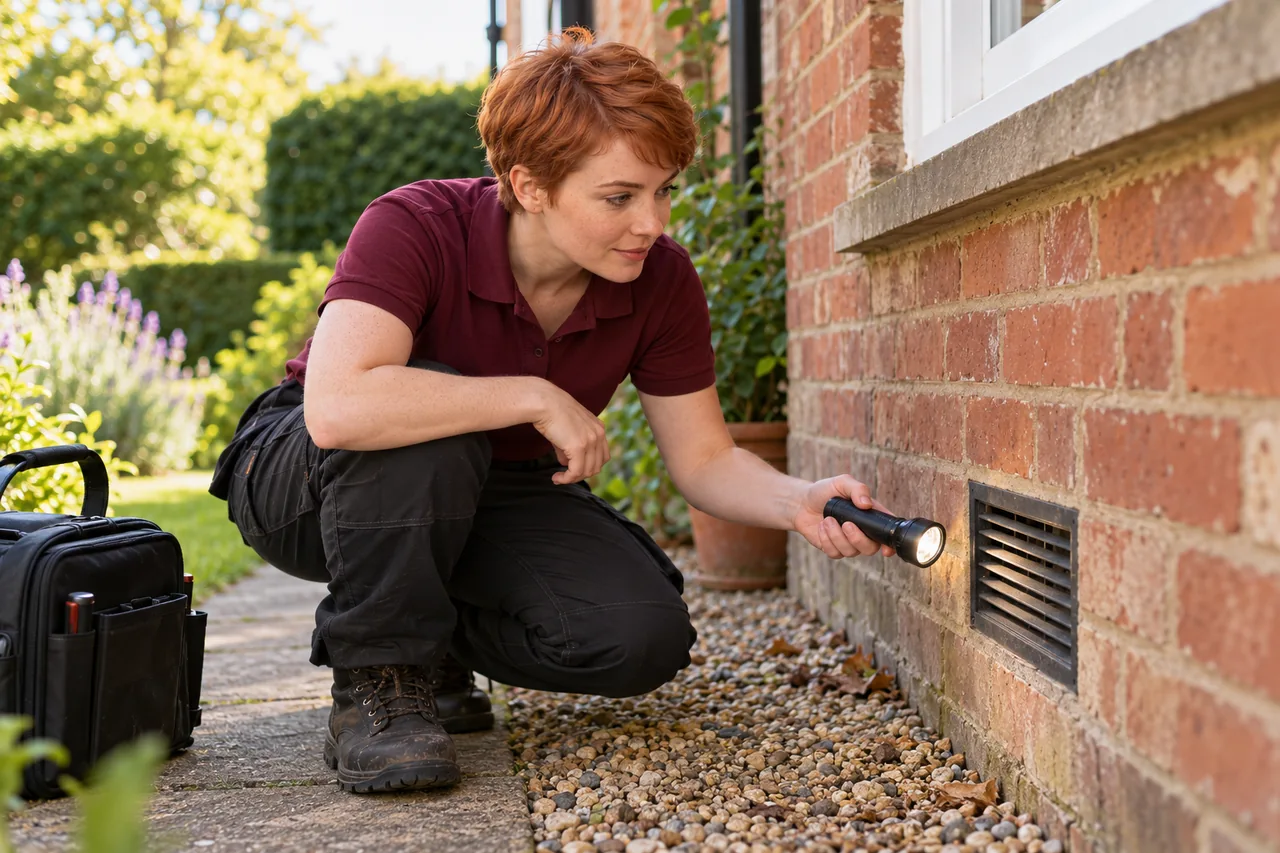
An inspection should connect the reported signs with what can actually be examined. Accessible pipe routes, cupboard bases, storage, door thresholds and roof-space access may each raise different questions. The scope needs to recognise fixed fittings, shared areas and spaces outside your authority. Where evidence is incomplete, that uncertainty should remain visible in the advice. A proposed method should follow the findings, the property and the risks to occupants, rather than simply the name of the pest mentioned on the telephone.
Before arranging work, discuss the areas to be checked, practical preparation and what the quoted visit includes. Ask whether monitoring, treatment, proofing or a later review is being proposed. These are related tasks, but they are not interchangeable. Our telephone enquiry guide explains the information that helps that discussion.
Inside a Pest Control Inspection
In a utility cupboard, a specialist may use a torch to examine accessible service penetrations and compare a suspected route with nearby signs. A hole beside a pipe does not by itself prove which animal is using it. The inspection should distinguish a possible opening from a route supported by evidence, while explaining any parts hidden behind fitted units.
A kitchen inspection may also consider stored food, waste arrangements and appliance recesses that can be reached safely. In rented or shared premises, access to a neighbouring room, riser or communal cupboard may need separate permission. Record those limits so that an inaccessible space is not mistaken for an inspected, clear area.

Looking beyond the first sighting
Roof-space noises need a different conversation from insects in bedding. Safe access, suitable boarding and the condition of the hatch affect whether a loft can be examined. Do not climb into an unboarded space or move insulation simply to prepare for a visit. Explain the location and timing of sounds, any visible opening and any previous work on the roof.
For fabric pests, an inspection may instead follow damage through wardrobes, carpet edges or stored natural fibres. Insect identification matters because adults, larvae and cast skins can point to different sources. These photographs illustrate possible inspection situations; they are not a staff directory or proof that a particular method will suit every property.

Different Pests Need Different Treatments
The table outlines questions that shape an assessment. It is a guide to discussion, not a treatment prescription or a promise of a fixed number of visits.
| Pest problem | Inspection focus | Treatment considerations | Follow-up |
|---|---|---|---|
| Mice and rats | Fresh signs, food access and connected service routes | Control points, occupant access and the timing of repairs | Compare monitoring results with new sightings |
| Squirrels | Roof access, sounds and visible entry points | Identification and suitable exclusion arrangements | Review entry routes and agreed repairs |
| Bed bugs | Sleeping areas, harbourages and movement of belongings | Room preparation and suitability of the proposed method | Review fresh evidence and any agreed return visit |
| Cockroaches | Warm recesses, food areas and adjoining spaces | Targeted access, hygiene and protected treatment points | Check activity in the identified harbourages |
| Moths and carpet beetles | Larvae, textile damage and stored natural fibres | Find the source and coordinate fabric care with treatment | Watch affected storage and previously damaged areas |
| Fleas | Affected rooms, soft furnishings and household animals | Coordinate property preparation with appropriate pet care | Review emerging activity and preparation advice |
| Silverfish | Damp-associated locations and stored materials | Consider moisture, harbourages and suitable treatment | Review environmental changes alongside sightings |
Working in Homes and Commercial Properties
Preparation should make access useful without spreading the problem. Ask which cupboards, floor edges or storage areas need to be reachable. Protect food and utensils as advised, keep a clear route and explain fragile fittings or heavy equipment. Avoid moving potentially affected bedding, clothing or stock into an unaffected space before discussing the signs.
Children and pets need to be considered before equipment or products are selected. Describe where animals sleep, where food bowls sit and who uses the rooms. Keep occupants away from the working area and follow the specific instructions supplied for the method used. There is no single re-entry or cleaning interval that applies to every treatment.
For a business, explain opening hours, food handling, deliveries and who can authorise access. A visit may need coordination with a manager, landlord or maintenance contractor. Clarify any restrictions before an appointment is agreed. Keep treatment notes available to the people responsible for cleaning and repairs, so that useful equipment is not moved or treated surfaces cleaned contrary to the instructions.

Prevention and Aftercare
Prevention begins with the route or source identified during inspection. A worn door brush may merit attention, but it should not distract from a concealed service opening or an unresolved source in storage. Repairs need materials suited to the building and must preserve ventilation and other essential functions. Ask which work is included and which needs another trade.
After treatment, note the date, location and nature of fresh signs. Share that record at the agreed review rather than adding another product or moving control points. A follow-up visit may check equipment, reassess remaining activity or review repairs. Confirm its purpose, whether it is included and what would trigger additional work. Long-term advice should be practical enough for the household or business to maintain.
Food storage, waste management, fabric care and attention to moisture each have a role when relevant to the findings. A tidy room can still have a hidden route; an old mark can remain after activity has changed. Reviewing several pieces of evidence is more informative than treating a single sign as a complete answer.

Explore Our Services
Choose the problem closest to the evidence you have seen. If identification is uncertain, describe the signs when you call rather than selecting a treatment yourself.
Mice control ↗
Trace cupboard activity and small service gaps before discussing monitoring, control and proofing.
Rat control ↗
Assess larger rodent signs, accessible routes and the relationship between indoor activity and the surrounding property.
Squirrel control ↗
Discuss roof-space sounds, safe access and the entry points that need careful assessment.
Bed bug treatment ↗
Review sleeping areas, identification and preparation before a room-specific treatment is agreed.
Bed bug heat treatment ↗
Explore suitability, equipment access and preparation for a potential heat-based approach.
Cockroach treatment ↗
Focus on harbourages, food areas and practical access to places where activity is occurring.
Moth control ↗
Connect insect identification with damage to textiles and the source within stored belongings.
Flea treatment ↗
Discuss affected rooms and preparation alongside appropriate advice about household animals.
Silverfish control ↗
Consider sightings together with moisture, concealed harbourages and vulnerable stored materials.
Carpet beetle treatment ↗
Look for larvae, cast skins and sources associated with natural fibres and overlooked storage.
LET’S DISCUSS THE SIGNS