
UXBRIDGE / COCKROACH TREATMENT
Cockroach Treatment Uxbridge
A kitchen sighting needs a species and harbourage assessment. Discuss where cockroaches are appearing, what access is available behind fittings and how a targeted plan would be reviewed.
- Identify the cockroach before choosing a response
- Inspect warm appliance recesses and cabinet joints
- Look for egg cases, skins and concealed activity
- Assess food, moisture and adjoining-space routes
- Use monitoring findings to guide a review

URGENT ENQUIRY
Cockroaches active in a food area?
Tell us where insects are appearing and whether the space is in use. Discuss a prompt assessment and the practical steps to take before inspection.
01 / SPECIES FIRST
Identify the insect before planning the kitchen work.
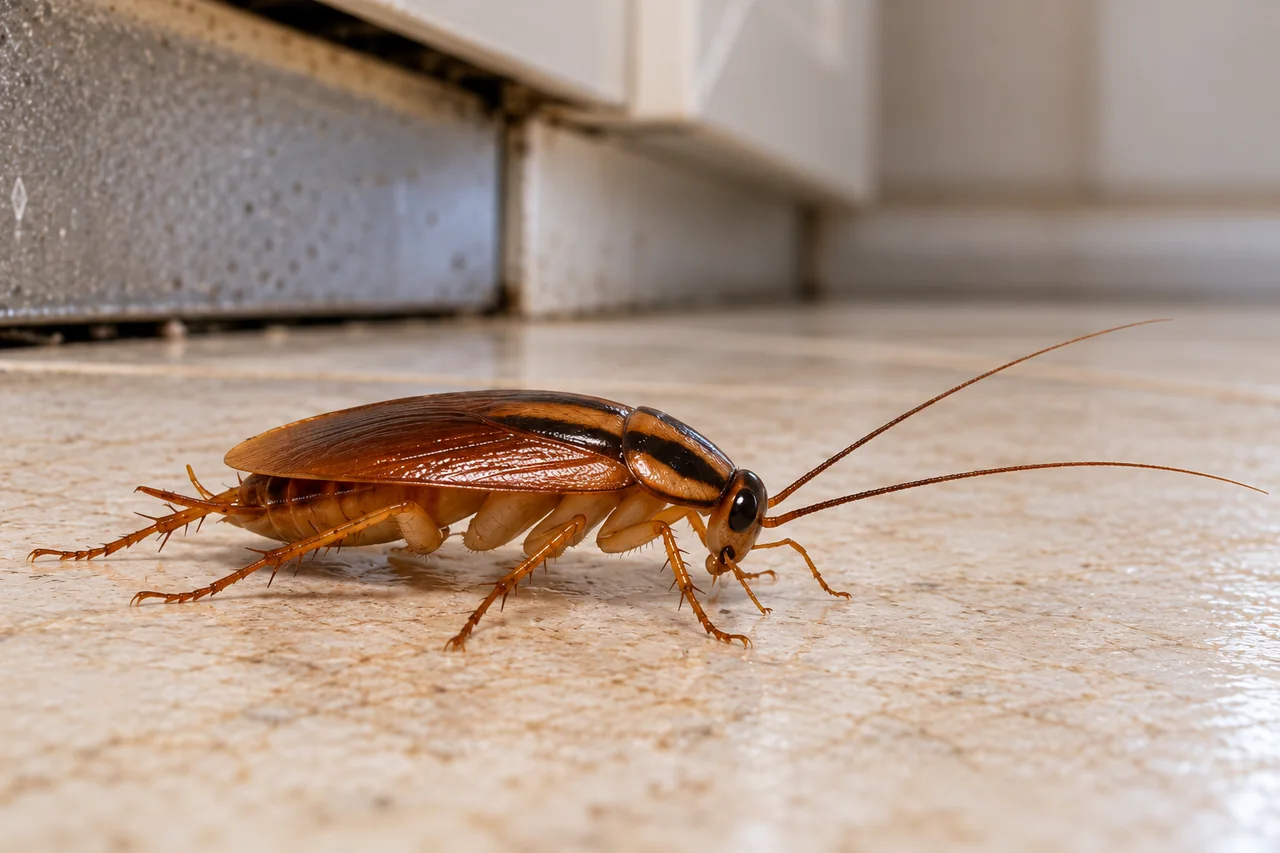
Cockroaches vary in appearance and the environments they favour. A specialist may consider a visible insect, a clear photograph or signs examined on site before recommending treatment. German and Oriental cockroaches, for example, have different identifying features and may lead the inspection towards different places. Do not assume every fast-moving insect near a cupboard is a cockroach. A description of the size, colour, location and behaviour can help decide what evidence is needed next.
Egg cases, cast skins and droppings can support the assessment, but their location and condition matter. Explain whether the finding was behind a warm appliance, near a water source or elsewhere in the property. A single insect at a doorway and recurring signs inside fitted units require different questions. If the insect is wingless, silvery and associated with damp areas, silverfish identification may be more relevant than applying a cockroach plan to an uncertain sighting.
| Finding | What to assess | Why it matters |
|---|---|---|
| Visible insect | Species and location | Guides the inspection focus |
| Egg case or shed skin | Nearby concealed shelter | May identify a harbourage area |
| Repeated appliance sightings | Warmth, gaps and access | Defines areas needing closer checking |
| Signs in adjoining units | Potential movement between spaces | May need coordinated access |
02 / KITCHEN ENQUIRY
Explain the pattern before arranging access.
When you call, say which rooms are affected, where insects appear and whether activity is seen when lights are switched on or while the kitchen is in use. Mention recent appliance deliveries, moved storage or reports from adjoining premises if relevant. Those details guide questions; they do not establish the source automatically. Tell the person arranging the visit about fixed appliances, locked cupboards and spaces managed by a landlord or building operator.
Give a clear account of any products already used, including aerosol spraying or a shop-bought monitoring trap. Avoid adding another treatment just before the inspection without discussing it. The specialist needs to understand both the original pattern and anything that might have changed the visible evidence. In a shared kitchen, collect observations from other occupants so the appointment does not depend entirely on the experience of the person who happens to provide access that day.
03 / HARBOURAGE INSPECTION
Look where appliances and cupboards meet.
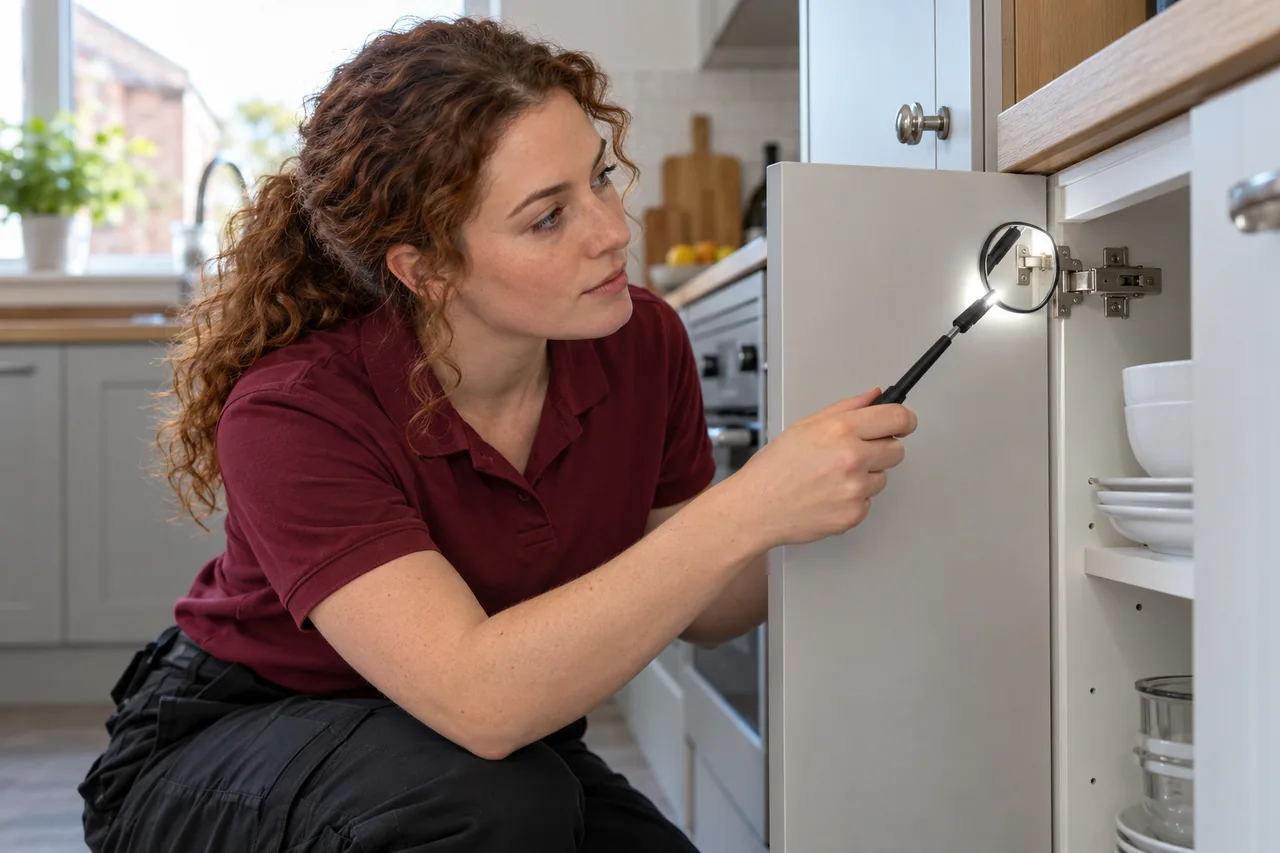
Accessible cabinet joints, plumbing openings, appliance recesses and storage edges can be useful inspection points. The aim is to locate likely harbourage and understand the extent of activity without dismantling fittings unnecessarily. A torch or inspection mirror may help examine a narrow recess. Ask which areas can be checked during the proposed visit and what remains concealed behind fixed equipment. Moving a connected appliance safely is a separate practical matter, not an assumption about ordinary access.
The inspection should also consider food residues, moisture and routes between related spaces. A visible harbourage in one unit does not prove that the rest of the building is unaffected. Where a shared service route or neighbouring kitchen may matter, discuss coordination and permission. For food businesses, explain operating times and storage arrangements so access can be planned around actual use. The specialist should distinguish inspected areas from places that remain outside the agreed appointment.
04 / TARGETED OPTIONS
Choose a method for the harbourage and species.
Depending on identification and site conditions, professional cockroach management may consider monitoring, suitable bait or other targeted treatment alongside changes to food and moisture access. The method used at your property needs confirmation. Ask where work would be carried out, why it fits the findings and what preparation it requires. A broad application across every kitchen surface should not substitute for locating the activity and explaining the treatment area.
If baiting or another product-based method is proposed, follow the directions about cleaning, contact and interference with treatment points. Spraying household products over or near an agreed treatment can alter the plan. Tell everyone using the kitchen what must remain undisturbed. Monitoring devices may help record activity in particular locations, but a device is useful only when its position, purpose and checking arrangements are understood. Ask how those findings will influence the next visit.
| Consideration | Discuss before authorising work |
|---|---|
| Species | Evidence supporting the identification |
| Harbourage | Accessible and uninspected locations |
| Treatment | Selected method and preparation |
| Monitoring | Locations, checks and interpretation |
| Food areas | Restrictions on use and cleaning |
05 / FOOD AREA PREPARATION
Protect food and make the relevant recesses accessible.
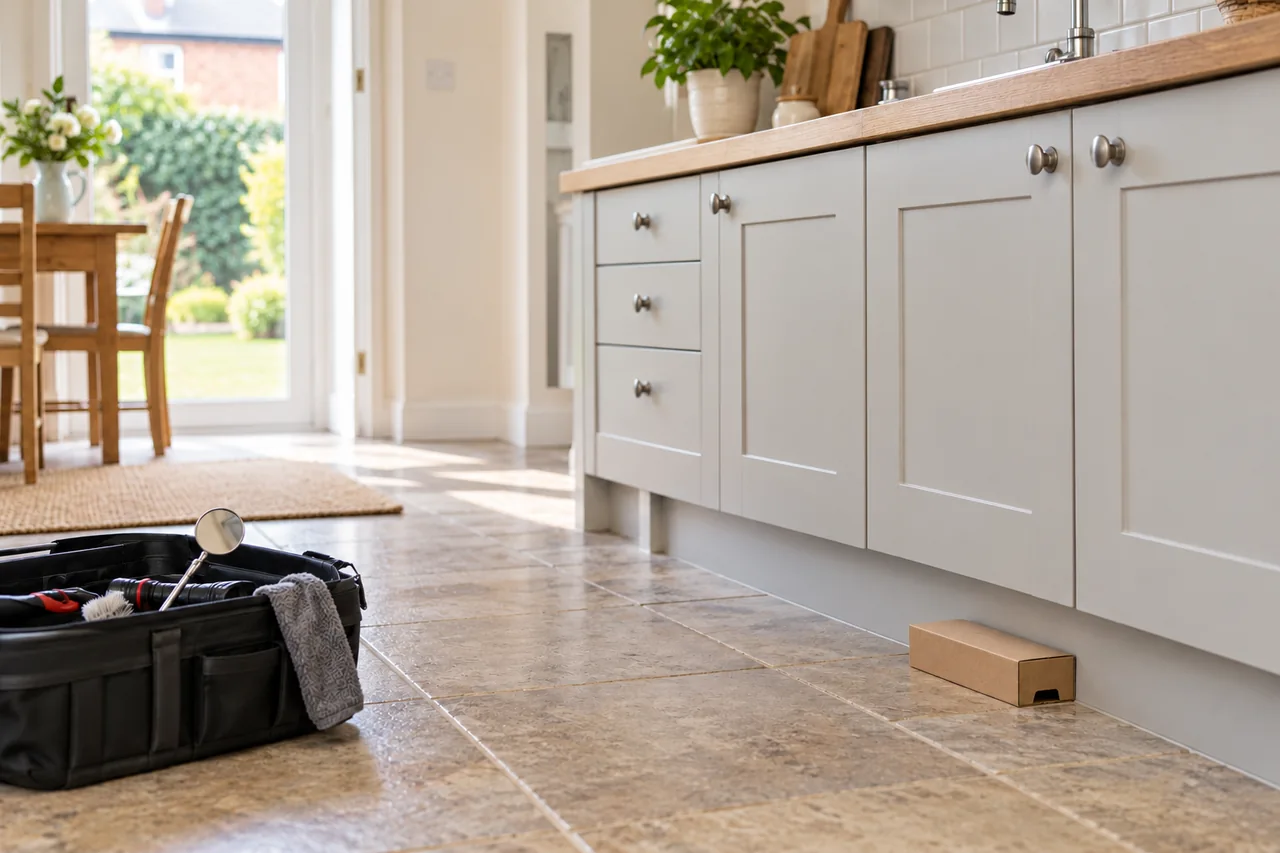
Ask which cupboards need clearing and how food, utensils and preparation surfaces should be protected. Preparation should fit the method, not a generic instruction to move all kitchen contents elsewhere. Explain delicate equipment, electrical connections and anything that cannot be moved safely. A clear route to the relevant units is more useful than attempting to dismantle the kitchen before the specialist has established where inspection is needed.
Where the kitchen belongs to a business or shared premises, decide who can authorise access and communicate restrictions. Staff arriving later need to know whether a space can be used, cleaned or restocked. Tell the specialist about any pets or vulnerable occupants who may reach low-level treatment areas. If packaging damage appears to come from gnawing rather than insect activity, mention it separately; mouse control involves a different inspection and should not be assumed covered by a cockroach appointment.
06 / TREATMENT VISIT
Keep the visit tied to the identified areas.
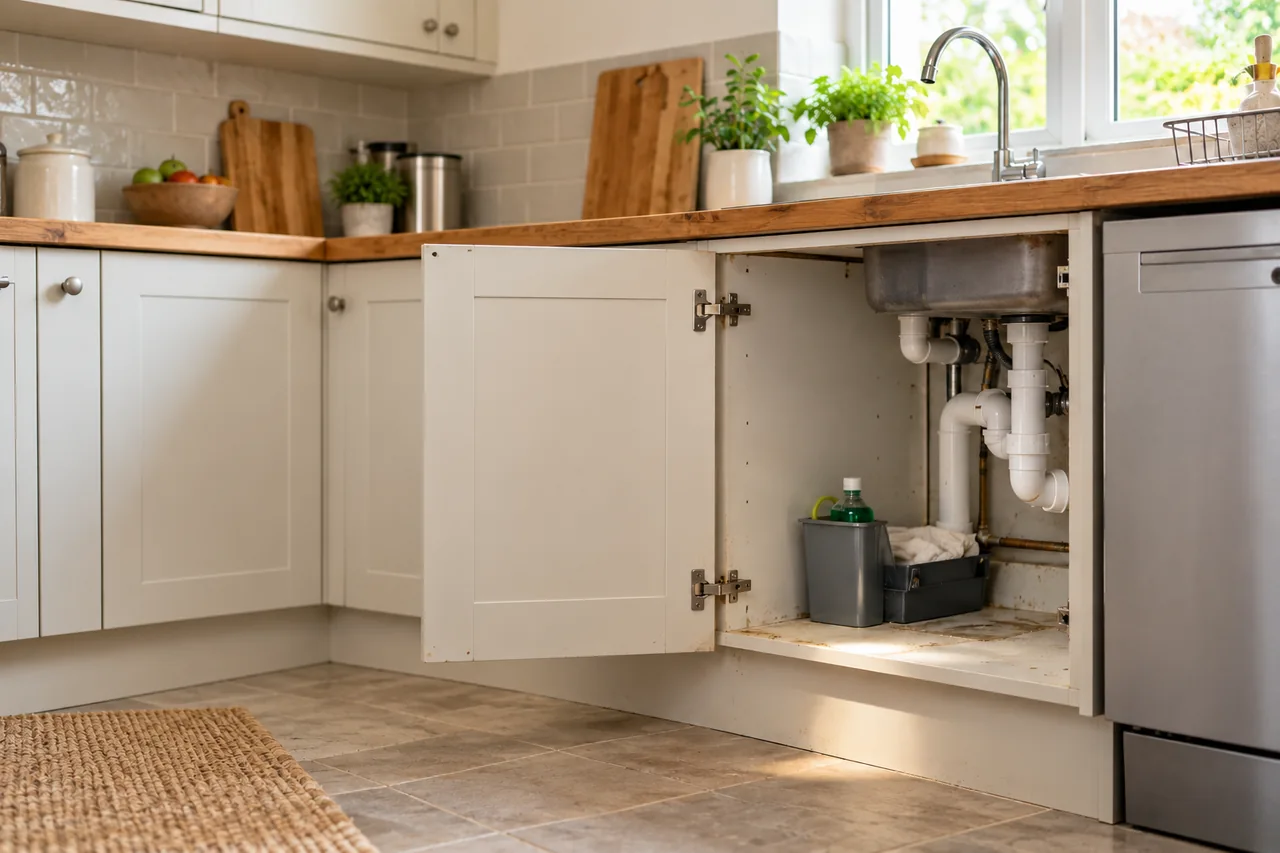
At the visit, explain changes in sightings and any new room affected since the enquiry. The specialist can compare those observations with the accessible evidence and confirm the proposed work. Agree the scope and price before treatment begins. Where the inspection reveals a limitation or a different insect, the next step may change. A useful explanation makes clear which harbourage or route each action is intended to address and which areas remain unexamined.
Follow the specific directions for remaining outside work areas, protecting food and returning surfaces to use. Cleaning and re-entry restrictions vary with the method and location, so a fixed waiting time should not be assumed. Do not open, remove or relocate monitoring equipment. Before the specialist leaves, ask for written or otherwise clear treatment notes that another household member, cleaner or member of staff can use without relying on your memory of several small kitchen locations.
07 / MONITORING REVIEW
A review asks where activity remains.
Record further sightings by location and timing rather than treating every insect as an identical event. Activity beside the same cabinet and a new finding on another floor may have different implications. At follow-up, observations can be compared with monitoring results, access changes and the treatment record. The review should ask whether the identified harbourage has been addressed and whether continuing conditions or another connected space need attention.
Confirm the expected review arrangements and whether they are included in the quotation. Some insect stages or concealed sites may affect the treatment sequence, but that does not justify a universal timetable for every property. The specialist should explain what will be assessed and what would change the proposal. Report products or deep cleaning carried out after the visit, because these can affect interpretation. Do not keep adding applications while waiting for the agreed review.
08 / ONGOING KITCHEN MANAGEMENT
Remove support for the harbourage, not just visible insects.
After the relevant restrictions are lifted, the plan may include managing food residues, accessible water and gaps around fittings. Ask which practical changes arise from the actual findings and which repairs require another trade. A leak or inaccessible appliance recess may remain important even when the visible kitchen is tidy. Housekeeping supports control, but it should not be used to claim that every infestation is caused by poor cleanliness or will end through cleaning alone.
Keep inspection and treatment records together, especially where a landlord, managing agent or business team is involved. The Uxbridge pest control overview explains how an assessment and aftercare plan connect. If activity returns, describe whether it follows a delivery, a change in adjacent premises or a repair opening, without assuming a cause. That context can help distinguish a new introduction from a concealed source that needs further investigation.
09 / COCKROACH QUOTATION
Price the site, species and checking arrangements.
A cockroach quotation may depend on affected rooms, accessible harbourage, species, the proposed method and monitoring or follow-up visits. Food premises and shared buildings can need coordination that changes the work involved. Ask what the initial assessment includes, which areas are excluded and how any further work would be agreed. No fixed cockroach-treatment rate is confirmed on this page; the full proposal should fit the property rather than borrow a comparison tariff.
If insects are active around food preparation or the affected area cannot be used normally, explain that when checking visit availability. An urgent enquiry does not guarantee immediate attendance. Keep exposed food protected and wait for specific preparation advice. Use Contact Us to discuss the locations, access and next appropriate appointment, with the full price confirmed before authorising the proposed treatment.
QUESTIONS ABOUT COCKROACH TREATMENT
Before arranging the visit.
Why does the cockroach species affect the inspection?
Different species may favour different conditions and harbourage. Identification helps decide which areas need checking and which response is suitable. A clear insect photograph or evidence examined on site can be more useful than a general description of crawling insects.
Should I spray behind the fridge before the visit?
Discuss existing and proposed products first. Adding a spray can affect observations or an agreed treatment. Do not move a connected appliance or apply another product simply to prepare for inspection.
Will a single insect mean the whole building is treated?
Not automatically. The location, identification and other evidence guide the scope. A specialist should explain why another area needs checking rather than assume every room requires the same application.
Can the inspection include neighbouring kitchens?
Only with appropriate access and permission. Explain reports from adjoining premises, but an appointment at your property does not automatically include them. Shared routes may need coordination with a landlord or managing agent.
When can kitchen surfaces be cleaned after treatment?
Follow the specific instructions for the method and areas used. Ask which surfaces can return to ordinary cleaning and which points must remain undisturbed. There is no single cleaning timetable for every cockroach treatment.
What makes cockroach monitoring useful?
A device should have an explained location, purpose and checking plan. Results can then be compared with fresh sightings and the original findings. Moving traps independently makes the pattern harder to interpret at review.
DISCUSS COCKROACH TREATMENT