
UXBRIDGE / BED BUG HEAT TREATMENT
Bed Bug Heat Treatment Uxbridge
A heat-treatment enquiry starts with suitability, room contents and a monitoring plan. Discuss what has been found and how a professional thermal treatment would be assessed in your property.
- Confirm bed bug evidence before proposing heat
- Assess room contents and heat-sensitive belongings
- Plan equipment access and suitable power arrangements
- Discuss monitoring of slower-heating locations
- Review the treated area and reintroduction risks
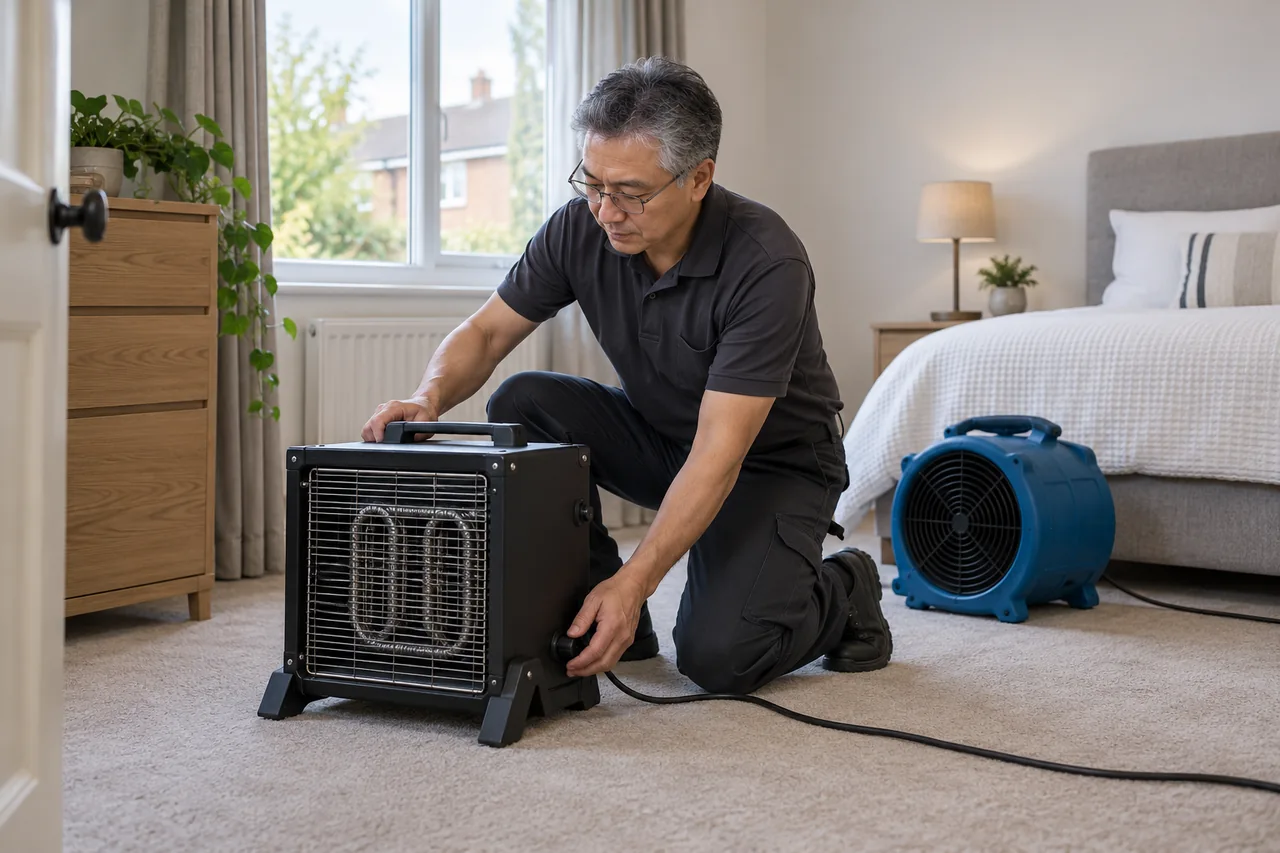
URGENT ENQUIRY
Need to discuss bed bug heat treatment?
Explain the affected rooms and current evidence. Check assessment availability and what preparation would be needed before any heat treatment is agreed.
01 / THERMAL SUITABILITY
First decide whether the room suits the method.
Describe the rooms involved, the evidence of bed bugs and any previous treatment when you enquire. Explain the building layout, access to the rooms and furniture that cannot easily be moved. Heat treatment is not simply a larger version of turning on domestic heating. A professional proposal needs to consider whether the intended area and its contents can be treated appropriately, and which parts might need a different approach.
If bed bugs have not yet been identified, the first step may be an inspection rather than booking heating equipment. The bed bug treatment page explains identification and room assessment in more detail. An enquiry should establish what you have seen, which sleeping areas are used and whether items have moved elsewhere. That information helps define the proposed area instead of assuming a single heated room addresses every possible source.
02 / CONTENTS PLANNING
Preparation is a room-by-room agreement.
Tell the specialist about sensitive belongings and materials before a method is agreed. Preparation instructions should identify which items need particular handling and how any affected item removed from the room will be managed. Moving untreated belongings elsewhere without a plan can leave a source outside the heated area. Do not guess that every possession can remain in place, or that everything should be carried out to another bedroom.
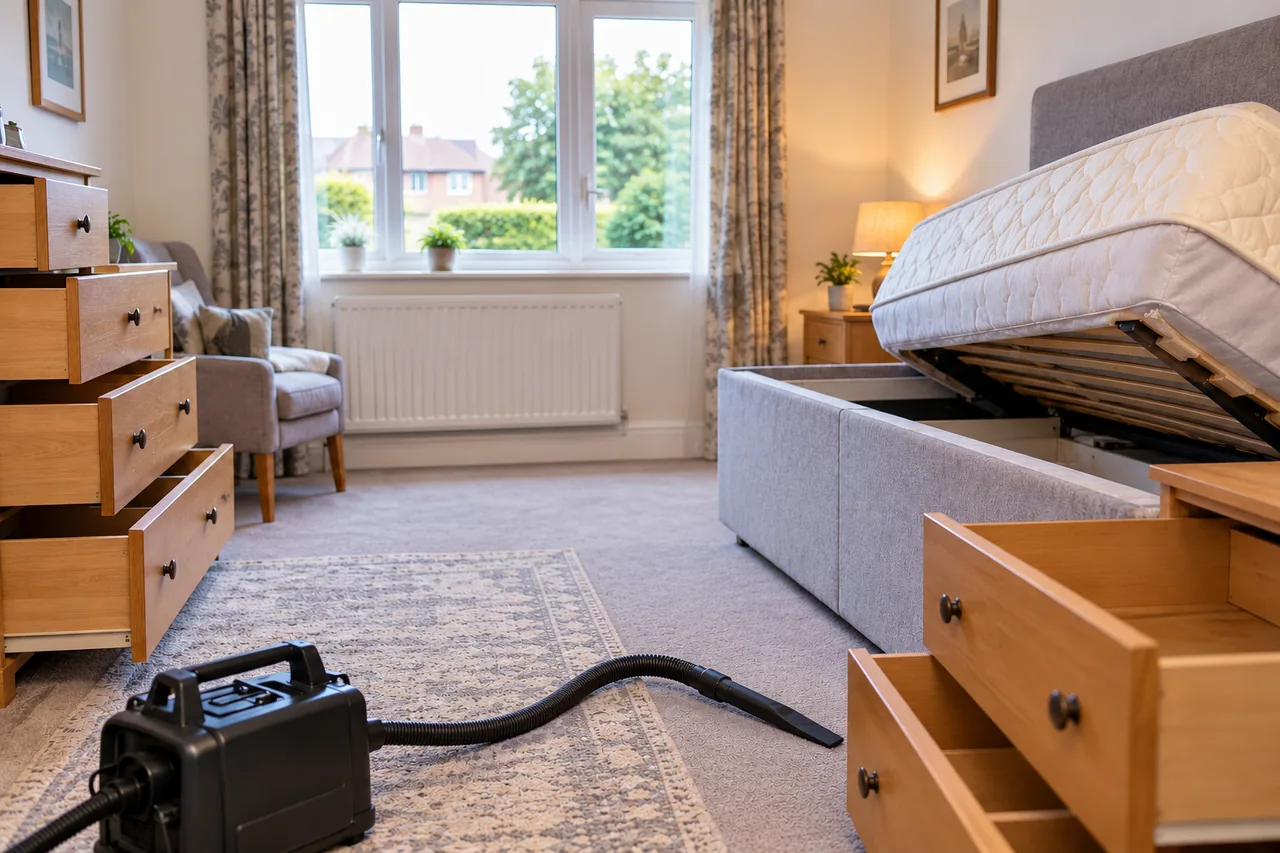
Ask how furniture, drawers and stored items should be arranged for the proposed work. Dense storage and inaccessible areas can affect the way heat reaches relevant locations, but the correct preparation depends on the equipment and room. Explain anything you cannot move safely. The specialist should clarify the instructions, access limits and arrangements for occupants, rather than expect you to recreate a technical setup from a photograph or a general checklist.
| Room consideration | What to discuss | Why it changes the plan |
|---|---|---|
| Sensitive belongings | Specific handling instructions | Avoid damage and untreated removals |
| Dense storage | Access to items and concealed areas | Affects heat penetration |
| Fixed furniture | What cannot be repositioned | May limit the proposed area |
| Occupants and pets | Temporary access arrangements | Keeps treatment areas controlled |
03 / CONFIRM EVIDENCE
The target still needs identification.
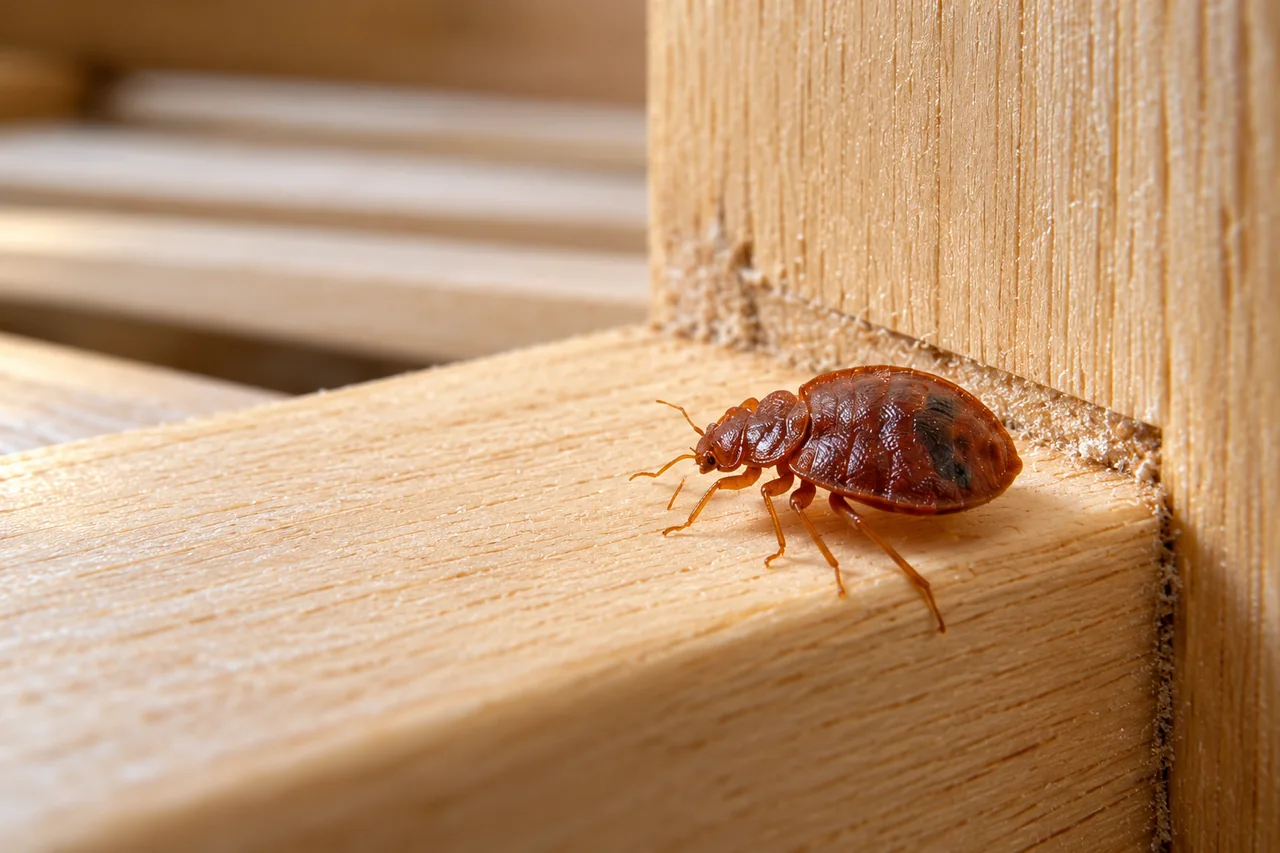
Thermal equipment does not remove the need to identify the pest. An inspection may examine accessible mattress seams, frame joints and nearby furniture for insects and related evidence. Bite reports alone are not a diagnosis. Ask which findings establish bed bugs and whether the room assessment suggests activity in another resting area. The proposed heat-treatment boundary should follow that evidence, not just the bedroom named when the appointment was first discussed.
Explain any furniture, luggage or bedding that has been moved since the first signs appeared. The location history of those items can matter when deciding what needs assessment. If evidence points to a different insect or the findings remain uncertain, that should be explained before thermal work is authorised. The purpose of the suitability stage is to choose a justified response, not to make every enquiry fit a method that was selected before the room was inspected.
04 / EQUIPMENT ACCESS
Discuss a professional setup, not household heating.
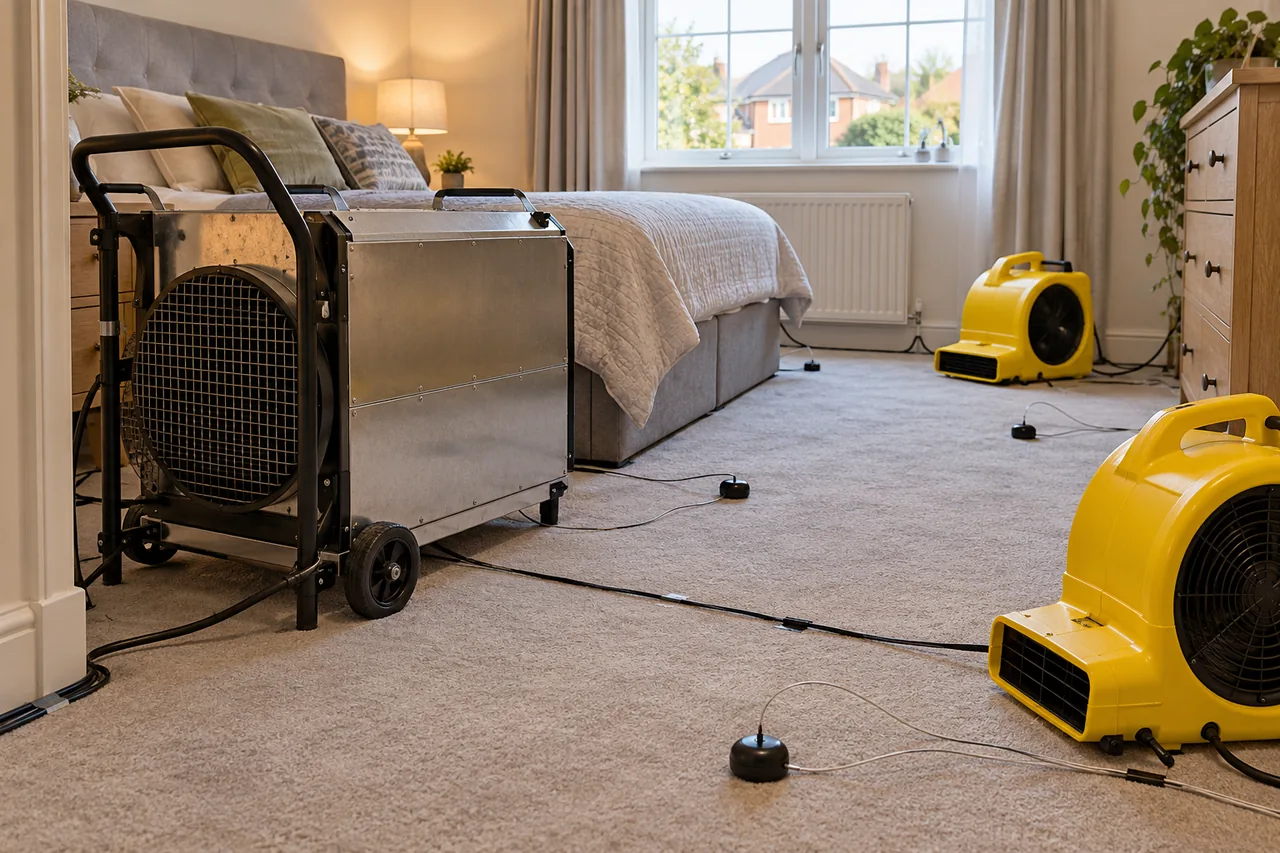
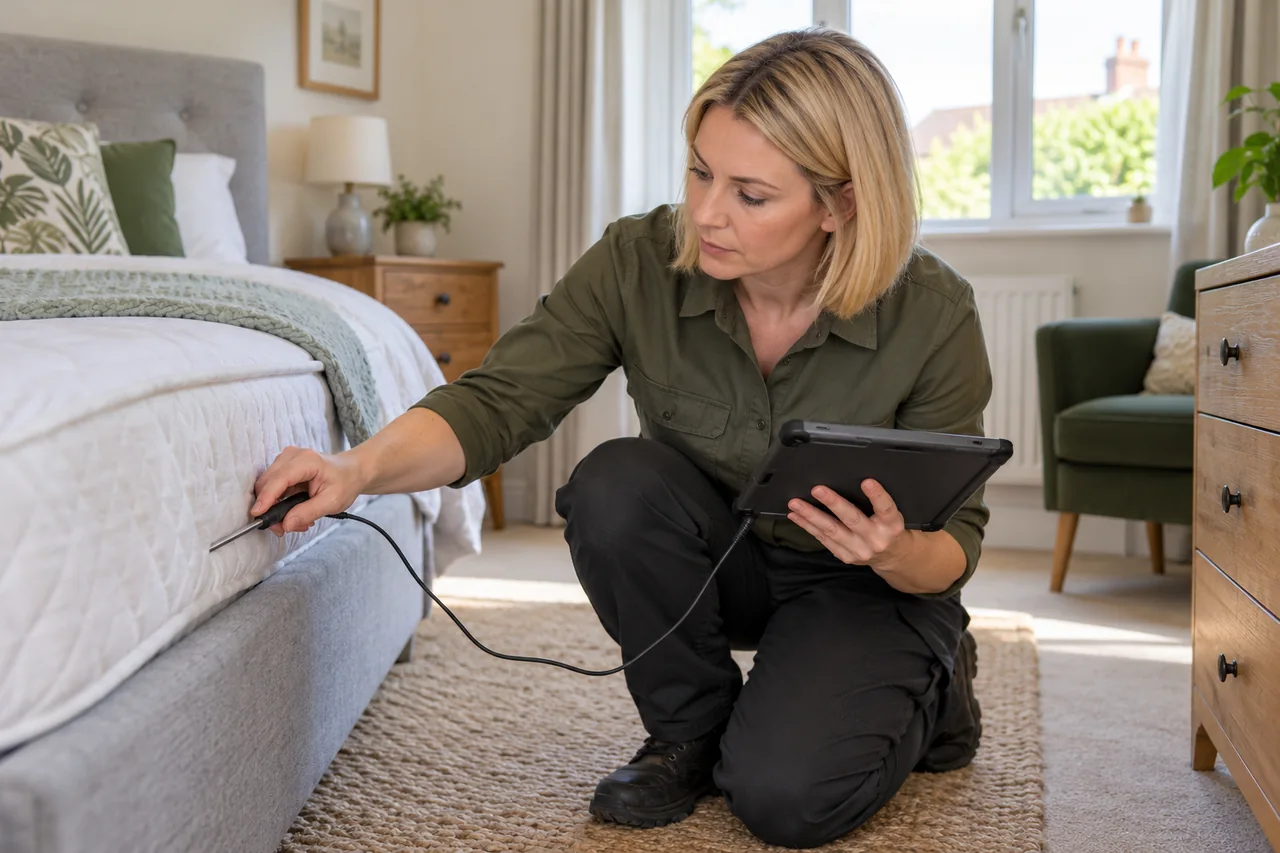
A professional thermal proposal may involve purpose-designed heating equipment, air movement and temperature sensors. The actual equipment and its suitability must be confirmed with the provider. Access routes, room dimensions and the required electrical arrangements need assessment before work begins. Do not improvise a treatment with domestic heaters, ovens or a thermostat. The equipment photographs are illustrative and do not confirm the setup that would be selected for every building.
Ask how equipment is brought in, how the work area is controlled and what you need to arrange before arrival. Cables, doors, neighbouring spaces and items that restrict access should be discussed by the operator as part of their setup. A difficult room or an unsuitable supply may change the proposal. The quotation should explain whether any additional preparation or access work is needed rather than leaving those decisions until equipment is already being positioned.
05 / TEMPERATURE ASSESSMENT
Monitoring matters beyond the air temperature.
A room can warm unevenly. Temperature assessment therefore needs to consider relevant harbourage and slower-heating locations, not only a reading taken in open air. Ask how the operator monitors the proposed treatment and decides whether the required conditions have been reached. The appropriate exposure and monitoring arrangements depend on the professional method and equipment. This page does not prescribe a universal temperature, duration or household procedure for treating a room yourself.
Records of the treatment conditions can support the later assessment. Ask what information you will receive, how limitations are documented and what happens if a relevant area cannot be treated as intended. Monitoring also matters for protecting the room and its contents. A technically useful explanation should connect preparation, equipment and the locations checked, rather than rely on the idea that a hot room must automatically mean every concealed insect has received the same exposure.
| Technical issue | Question for the provider | Useful outcome |
|---|---|---|
| Heat distribution | Which locations are monitored? | A defined checking plan |
| Slow-heating areas | How are concealed or dense items assessed? | Known limitations |
| Treatment record | What conditions and exceptions are documented? | Information for review |
| Contents protection | How are sensitive materials considered? | Specific preparation advice |
06 / OCCUPANT SAFETY
Agree access and return arrangements in advance.
The proposal should explain who can enter the work area, where occupants and pets should be during treatment and how return to the room is authorised. Those arrangements must suit the actual method and property. Tell the specialist about shared entrances, neighbours affected by access or anyone who cannot easily leave the relevant area. A suitable plan deals with those practical constraints before work is confirmed, rather than promising a universal absence period.
Follow the operator’s preparation and return instructions. Do not enter to retrieve an item or adjust equipment while the area is controlled. If something essential was overlooked during preparation, contact the operator instead. After work, ask when furniture and belongings can be handled normally and whether any separate treatment restrictions apply. Heating, cleaning and product-specific directions are not interchangeable; the notes should identify what was actually done and which precautions remain relevant.
07 / POST HEAT REVIEW
Assess the result and the routes back into the room.
After the agreed work, retain the treatment notes and record any fresh insect evidence by room and item. If a follow-up assessment is proposed, clarify its purpose and whether it is included in the quotation. The review may consider ongoing signs, items that were excluded or belongings brought back after treatment. It should build on the documented work rather than judge the outcome solely from how warm the room felt or how few insects were visible immediately afterwards.
Heat alone does not leave a lasting protective treatment against a new introduction. Ask how handled belongings should be returned and what to watch for if items arrive from an affected area elsewhere. That does not mean every new mark proves failure; observations still need interpretation. If another method formed part of the plan, follow its separate aftercare instructions. Report anything unclear before cleaning, moving furniture or adding a product that could complicate the next assessment.
08 / HEAT COST FACTORS
Price the preparation and the monitored work.
The cost of a heat-treatment proposal can depend on room size, contents, access, equipment requirements, preparation and the scope of assessment afterwards. A bedroom with dense storage and fixed furniture may need different planning from a clear, accessible room. There is no confirmed thermal-treatment tariff here. Ask for the full proposal and price, including exclusions and any additional work, rather than treating a general bed bug comparison rate as a quotation for professional heating.
Before confirming a visit, make sure the enquiry has covered evidence, room boundaries, sensitive contents and the instructions you can realistically follow. The Uxbridge homepage sets out the overall inspection-led approach. Where sleeping arrangements are urgently affected, explain that when checking availability, without assuming an immediate treatment is possible. Use Contact Us to discuss the next suitable assessment and the information needed for a tailored quotation.
QUESTIONS ABOUT BED BUG HEAT TREATMENT
Before arranging the visit.
Can ordinary central heating replace professional bed bug heat treatment?
No. Raising a domestic thermostat is not a professional thermal treatment. A suitable proposal involves purpose-designed equipment, assessment and monitoring; do not improvise with household heaters or attempt to heat a room to a treatment condition yourself.
Does a high room-air reading prove concealed areas were treated?
Not on its own. Dense materials and concealed locations can warm differently. Ask how relevant areas are monitored, what records are provided and how any limitations are considered in the proposed assessment.
Should I remove all my belongings before heat treatment?
Follow the specific preparation plan. Some items may need particular handling, while uncontrolled removal can leave affected belongings outside the proposed area. Discuss sensitive contents and anything you cannot safely move before agreeing the work.
Can heat stop another bed bug introduction later?
Heat alone provides no lasting residual protection against a new introduction. Discuss the return of handled belongings and what signs to record afterwards. Any additional method and its aftercare need separate explanation.
Is one heat appointment a guaranteed complete solution?
No universal guarantee is confirmed here. Suitability, access, preparation, monitoring and areas outside the proposed treatment all matter. Ask what the quotation includes and how the result and any continuing signs will be assessed.
What should the heat-treatment quote identify?
It should identify rooms, preparation, equipment access, sensitive-content arrangements, monitoring, restrictions and the planned review. Confirm the full cost and exclusions before authorising work, especially where the room contains dense or fixed storage.
DISCUSS BED BUG HEAT TREATMENT