
UXBRIDGE / RAT CONTROL
Rat Control Uxbridge
Start at the route into the building, not just the place a rat was seen. An assessment can connect outside activity, accessible entry points and the evidence inside your property.
- Assess outside runs beside walls and storage
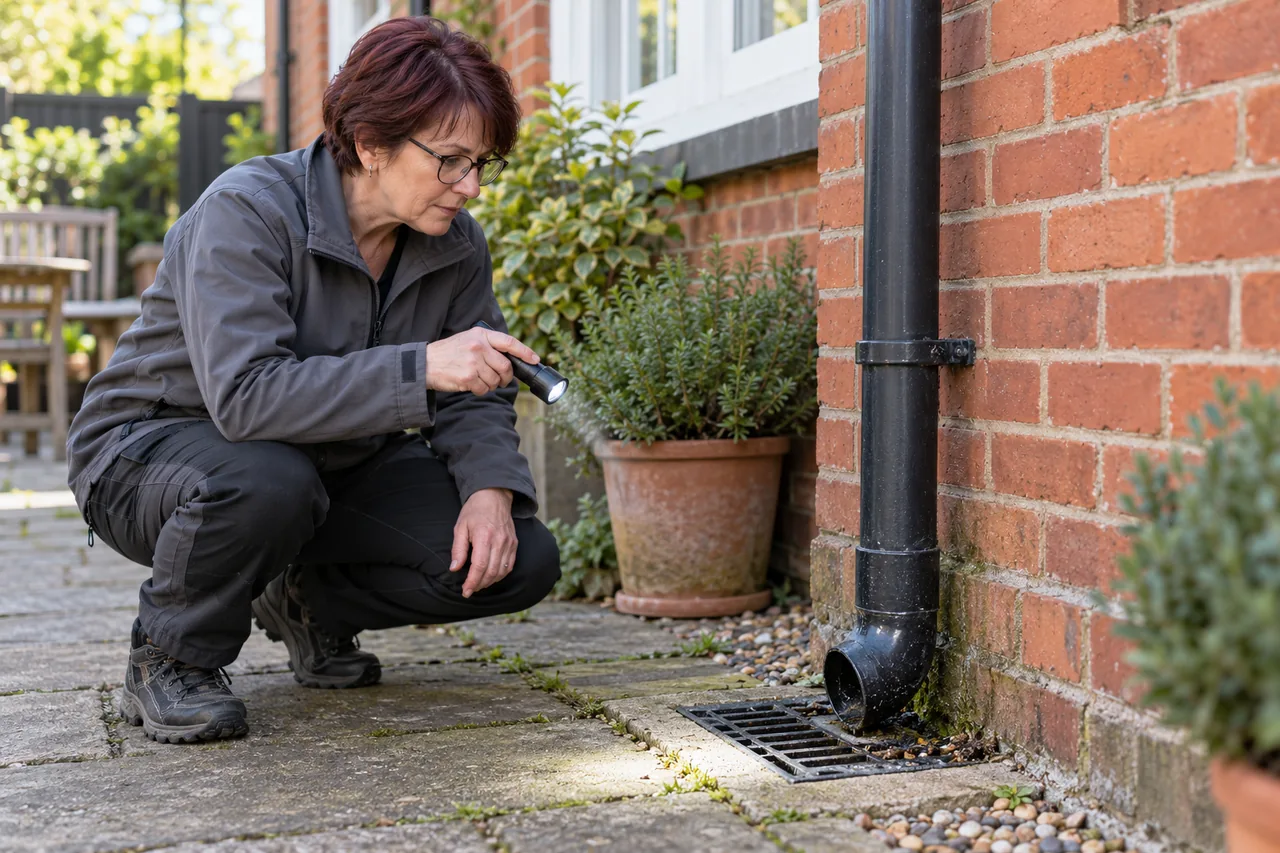
- Check drain surrounds without assuming a defect
- Distinguish rat signs from smaller rodent activity
- Plan control around non-target animal access
- Review monitoring before agreeing final repairs
URGENT ENQUIRY
Concerned about rats indoors?
Explain where rats are active and whether food areas or occupied rooms are affected. Call to discuss the immediate concern and current visit availability.
01 / OUTSIDE ROUTES
Look beyond the room where the noise started.
Rat activity may first be noticed beside a bin store, beneath a kitchen floor or along a garden wall. During an enquiry, describe both indoor and outdoor signs, even when they seem unrelated. Explain whether the route involves a shed, an extension or a shared yard. The first assessment should decide which of these observations may connect, rather than assuming that the most visible hole is the only way into the building.
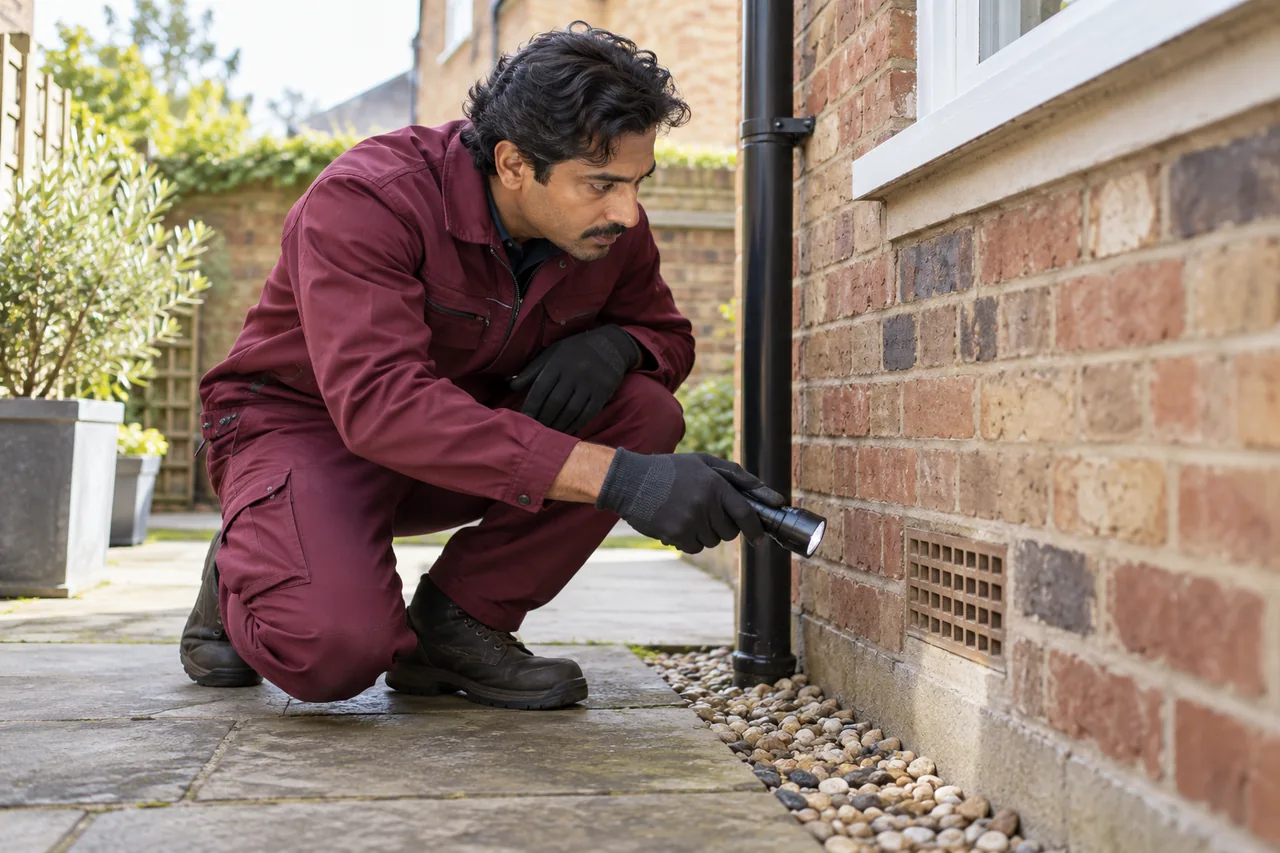
A property inspection can consider accessible boundaries, waste storage, gaps around services and the outside face of affected rooms. Safe access is important: tell the specialist about locked gates, overgrown areas or a neighbour who controls a shared passage. A survey of your property does not automatically include another building. Where access elsewhere may be useful, discuss permission before the appointment so the limits of the inspection are understood.
02 / IDENTIFY RAT SIGNS
Confirm what the signs actually support.
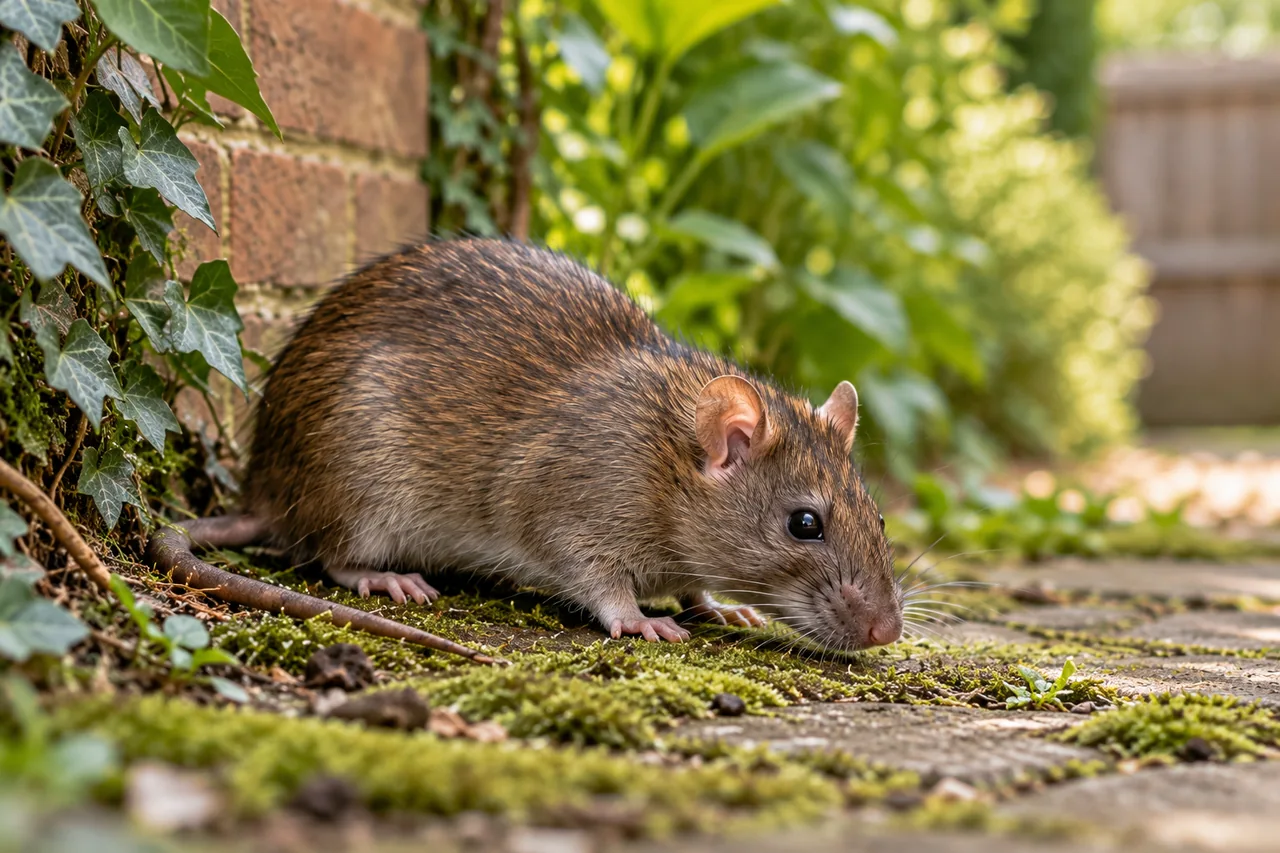
Sightings, droppings, gnawing and routes through stored materials can contribute to identification. The specialist may compare the location and appearance of several signs rather than decide from one photograph. A young rat can be confused with a different small mammal, so describe the animal without trying to force a diagnosis. If evidence instead points to mouse activity, the approach and equipment positioning may need to change.
Fresh damage in one place and old traces elsewhere do not necessarily describe the same episode. Explain when each sign first appeared and what has changed since then. Photographs can help preserve that sequence, provided you can take them without handling droppings or entering an unsafe void. Do not clear a suspected burrow or put a hand into a hidden opening to establish whether it is occupied. Those details should be assessed through a suitable inspection.
| Observation | Inspection question | Relevant access |
|---|---|---|
| Run beside a wall | Where does it lead? | Garden or shared passage |
| Damage below kitchen units | Is there an indoor route? | Accessible cupboard bases |
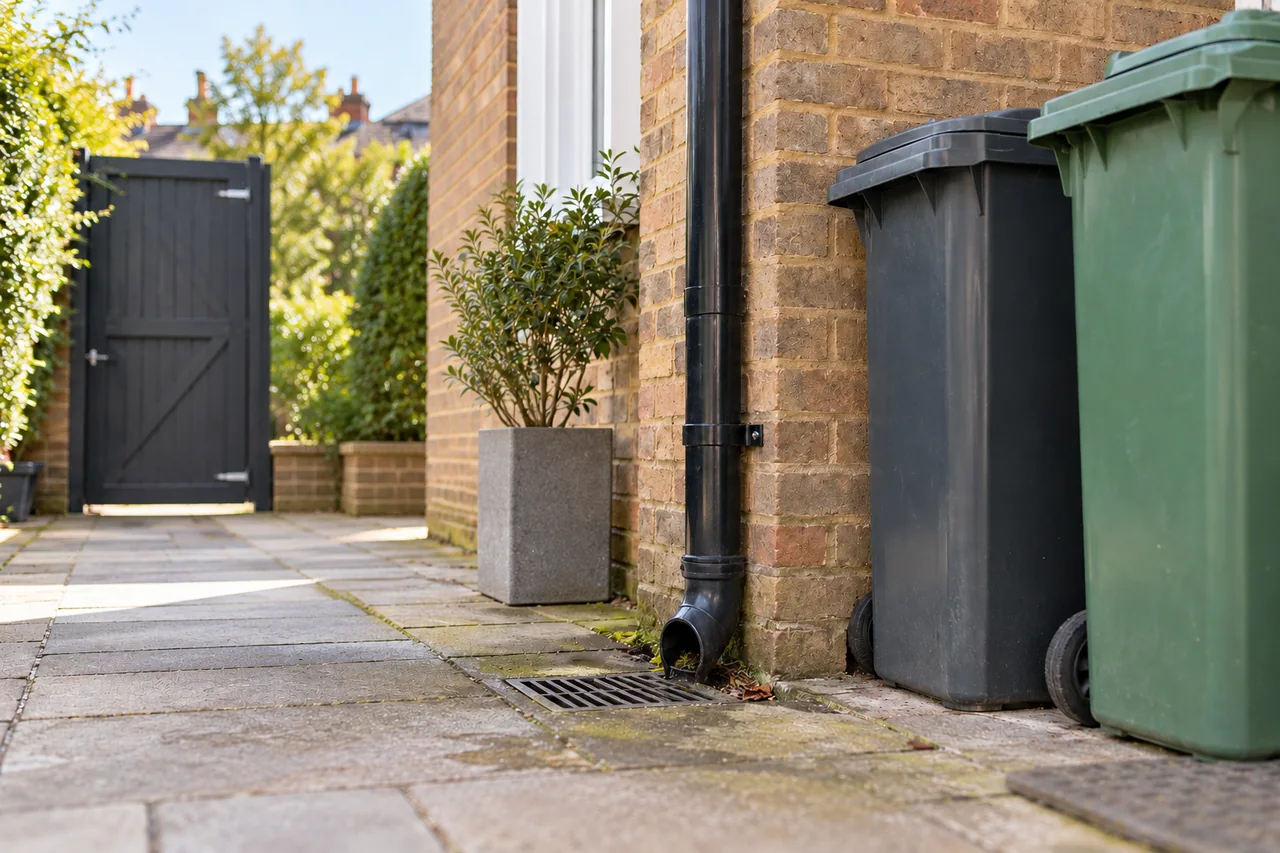
| Activity near a drain | Is further drainage investigation justified? | Safe access around the cover |
03 / DRAINAGE CHECK
A drain concern needs evidence, not a guess.
Rats seen near drainage can justify closer investigation, but their presence does not by itself prove a broken underground pipe. An ordinary pest inspection may examine visible surrounds and accessible points without conducting a drainage survey. Ask what can be established during the proposed visit and whether specialist equipment or another trade would be required. Opening chambers, entering confined spaces or tracing buried pipework should never be treated as casual household preparation.
If the evidence suggests a drainage defect, clarify the next step, responsibility for the pipe and how the findings will be recorded. In rented or shared buildings, a landlord or managing agent may need to arrange further access. Keep pest-control observations separate from a confirmed structural diagnosis. This helps avoid paying for a repair that does not address the actual route, or expecting an indoor treatment to resolve an unexamined connection beneath the property.
04 / INDOOR ASSESSMENT
Check where outside activity meets the interior.
Inside the property, the assessment may include the affected kitchen, utility room, accessible storage and service penetrations. The purpose is to understand movement and the extent of activity, not to open every wall or lift every floorboard. Explain concealed or inaccessible areas before work is priced. Where damaged fittings or electrics are suspected, suitable repair advice may be needed alongside pest management; do not handle a cable or pipe to inspect a gnawed section yourself.
The specialist should explain what was visible, which signs appear relevant and where uncertainty remains. In a business, discuss food storage, deliveries and waste routines without assuming that the building can be treated while every area stays in use. Other kitchen insects require a different assessment: cockroach treatment focuses on insect identification and harbourage rather than applying a rodent plan to every pest seen in the same room.
05 / CONTROL PLAN
Agree a targeted control and checking plan.
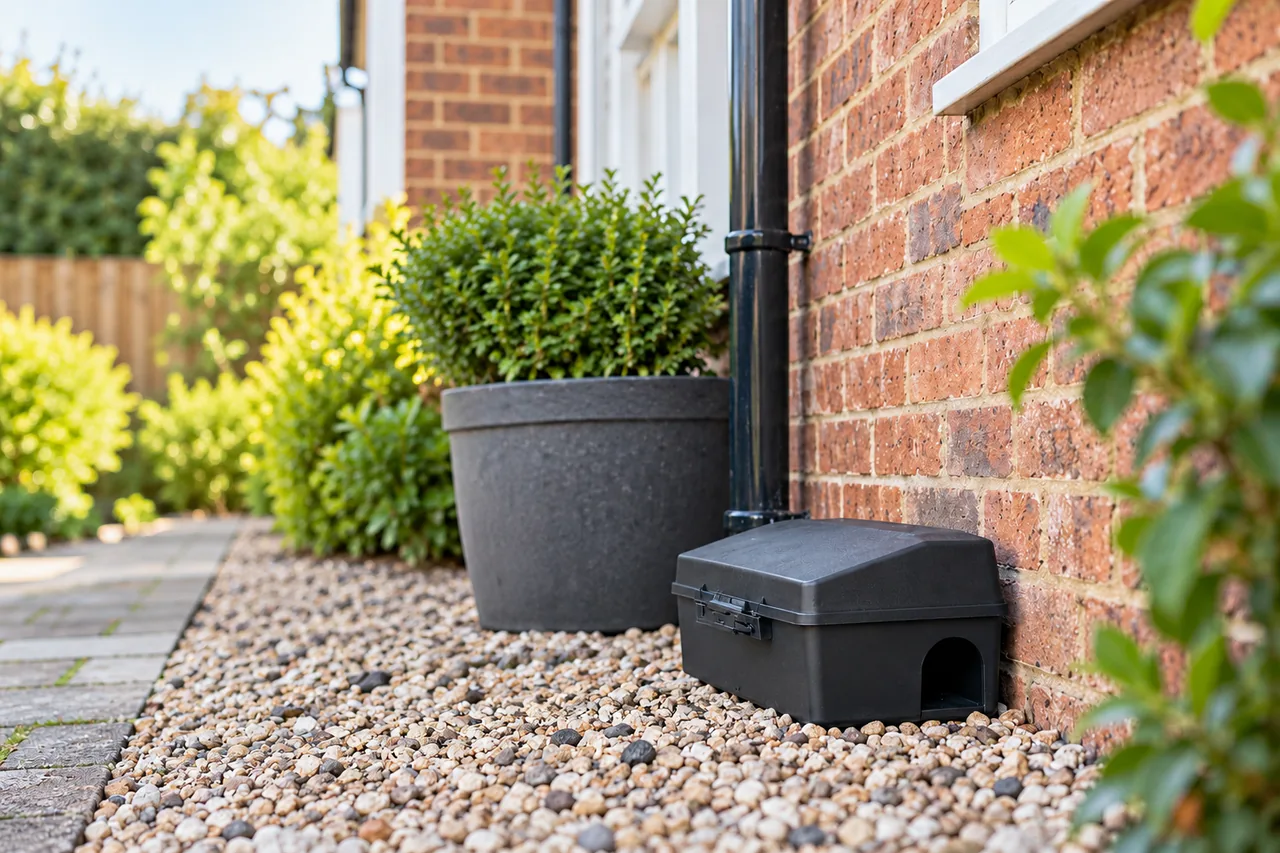
Depending on the findings, professional rat management may consider monitoring, trapping, secured baiting or appropriate exclusion. The specific method must be confirmed for your property. Ask how children, pets and visiting wildlife affect the proposal, and who checks any equipment. A control point should have a reason for its position and a plan for review. Leaving equipment without explaining its purpose does not give you a useful way to judge what is happening.
Where a product is proposed, the directions and application restrictions govern its use. Do not add household poison, relocate a trap or open a secured station independently. Explain any earlier attempts, including products placed outside the building. The person treating the property needs that information to understand both activity and potential risks. Agree how observations will be shared and what happens if a point cannot be accessed at a planned return visit.
| Plan element | Confirm before work |
|---|---|
| Control points | Purpose, locations and restricted access |
| Monitoring | What is recorded and when it is reviewed |
| Repairs | Timing and whether proofing is included |
| Further investigation | Which findings justify another specialist |
06 / PREPARE ACCESS
Prepare the outside and inside access together.
Make the reported areas accessible without disturbing the signs. Ask whether anything needs moving from beside a wall or a cupboard base, and explain items too heavy to shift safely. Arrange keys for gates and outbuildings. Keep dogs and other pets away from the inspection route. If a neighbour or caretaker controls a shared area, confirm access in advance rather than expecting the specialist to enter without permission.
Food and waste management can support a plan, but preparation should not conceal important evidence. Ask how damaged packets or contaminated materials should be handled and whether the specialist needs photographs before they are removed. Do not wash or dismantle monitoring points. During the visit, make sure the person providing access can explain sightings reported by other occupants, including locations that may otherwise be missed because the original observer is away.
07 / REVIEW RESULTS
Follow-up should test the explanation.
A review may compare equipment findings with fresh damage, sightings and changes to the suspected route. Keep a simple record of the date and place of each observation. If activity shifts from outdoors to a concealed indoor area, report it rather than moving equipment to chase it. The next visit should use that information to assess whether the proposed route and control remain appropriate, and whether another accessible part of the property needs checking.
Ask when results will be reviewed, how many visits the quotation includes and what would require additional work. Reduced sightings are useful, but a monitoring decision should consider the wider findings. At the end of the plan, clarify equipment removal and any remaining repair priorities. If rats return after a period without signs, describe the gap in activity and subsequent building or drainage changes rather than assuming the earlier treatment simply needs repeating.
08 / REPAIR PRIORITIES
Remove the opportunity to use the route again.
Repairs may involve service openings, damaged thresholds, waste storage or building fabric, depending on what was found. Proofing should be suited to the material and timed around the control plan. A visible gap cannot automatically be closed while the position of animals inside the structure remains uncertain. Ask which repairs a pest specialist can undertake, which are excluded and which need a roofer, builder or drainage contractor with appropriate access.
Review accessible food, animal feed and waste arrangements, particularly around shared yards and commercial storage. Avoid treating a tidy garden as proof that no route exists: concealed access may be the central issue. The Uxbridge service homepage explains the wider inspection approach. Keep photographs of agreed repairs and the earlier findings so a future enquiry can distinguish a new opening from an issue that was never fully resolved.
09 / RAT QUOTE
Price the investigation and the proposed response.
Rat-control pricing can depend on indoor and outdoor access, the extent of evidence, selected control, monitoring visits and any proofing included. Drainage investigation or structural repairs may be separate. Ask what the initial visit covers and how any additional work would be agreed. No rat-specific fixed tariff is confirmed here; a published comparison rate cannot tell you the cost of investigating a concealed route or a shared building.
Where rats are active in a food area, explain the immediate effect on using that space and ask about the earliest appropriate assessment. Availability must be confirmed; an emergency enquiry is not an arrival guarantee. Protect exposed food and keep people away from contaminated materials while awaiting instructions. Use Contact Us to describe the address, the signs and the access required, then confirm the proposed visit and full quotation.
QUESTIONS ABOUT RAT CONTROL
Before arranging the visit.
Does seeing a rat near a drain prove a broken pipe?
No. It identifies a place worth considering, not a confirmed defect. Ask whether the ordinary inspection can establish more or whether a separate drainage investigation would be justified by the evidence.
Can you inspect a shared bin store?
Discuss permission and keys before booking. Shared waste areas may be relevant to activity, but access and responsibility need to be clear. An appointment at one flat does not automatically authorise entry to every communal area.
Should I fill a suspected rat burrow?
Do not disturb it simply to prepare for the visit. Record its location from a safe position and discuss it during the enquiry. The route, occupancy and timing of any repair need assessment first.
Are outside monitoring stations safe for pets?
Positioning, equipment and restrictions must be assessed for the actual site. Explain pets and visiting animals beforehand. Follow the instructions and do not move, open or interfere with any secured control point.
Will the visit include lifting the kitchen floor?
Not automatically. Explain the suspected void and ask what accessible inspection includes. Destructive access, heavy lifting or investigation beneath the structure needs a separate agreement and may involve another trade.
What should I report between rat-control visits?
Record fresh sightings, damage and their locations, along with changes to waste storage or building access. Share the pattern at review instead of relocating equipment yourself. These observations can guide the next assessment.
DISCUSS RAT CONTROL