
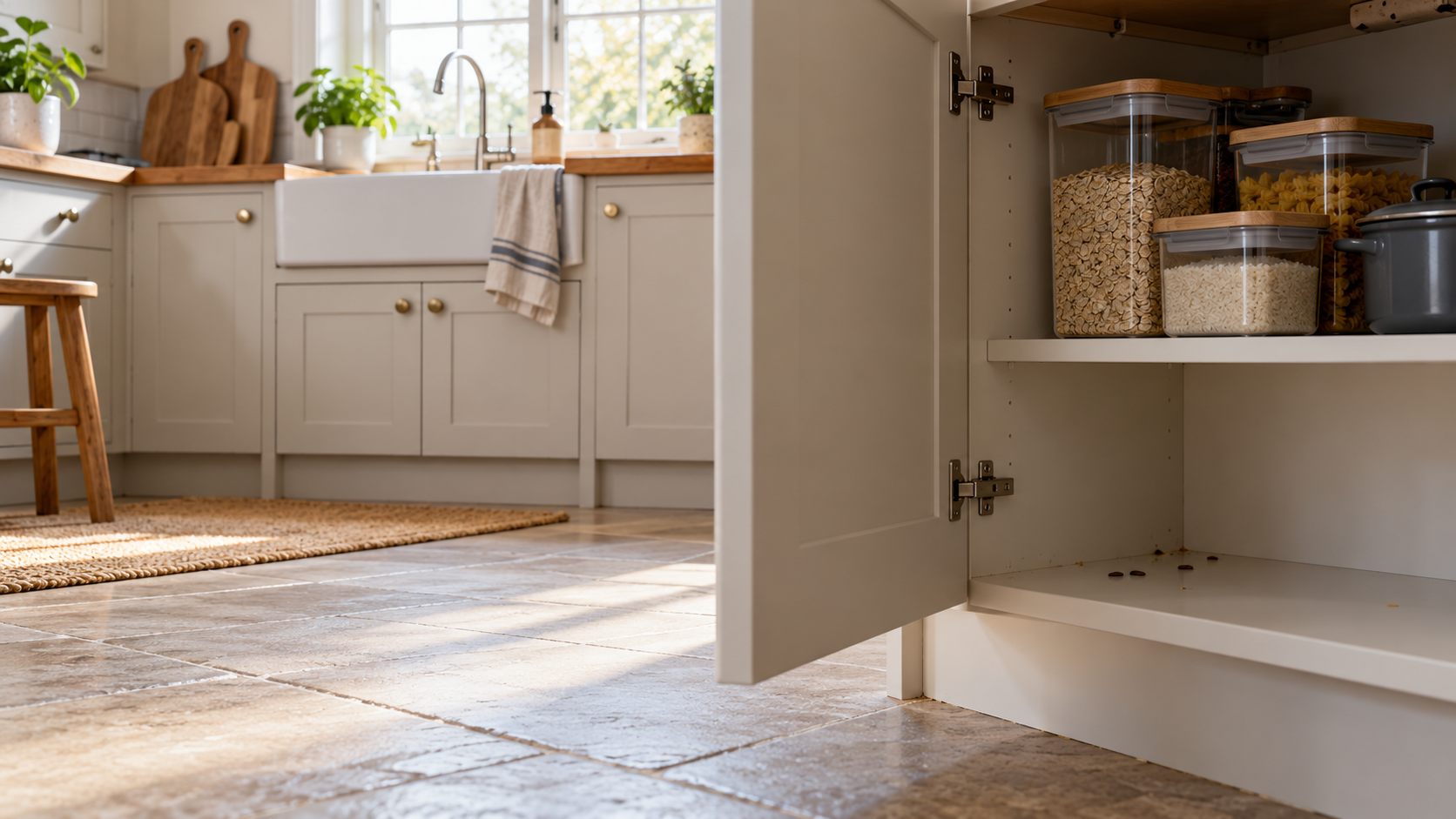
Finding a few dark pellets behind a kitchen cupboard can make the whole room feel unusable. Pause before pulling everything out. The useful first question is whether the marks are fresh evidence of mouse activity, old traces from a past problem or something else altogether. Their location, the condition of nearby food and any other signs will help you describe the problem accurately.
A kitchen gives mice cover, warmth and possible access to food and water. It also has several concealed routes: gaps around pipework, spaces behind appliances and voids beneath fitted units. A quick, careful check can identify where attention is needed without disturbing those areas or spreading contamination.
Check the evidence without disturbing it
Mouse droppings are usually small, dark and rod shaped. The British Pest Control Association describes them as typically around 3–6 mm long, but size alone does not identify an animal with certainty. Crumbs, seeds and insect debris can be confusing at a glance. Photograph the marks in place, including one wider photograph that shows the cupboard or appliance nearby. Note when you first saw them and whether the area had recently been cleaned.
Look for a pattern rather than relying on a single pellet. Are there marks beneath the sink, beside a boiler, at the back of a food cupboard or along the edge of a wall? Is packaging gnawed, or are there smudged marks around an opening? Evidence in several connected places may point to a route through the kitchen. Avoid reaching into a blind void or dismantling fitted units just to follow that route.
Freshness is difficult to judge reliably from appearance alone. A dry dropping may have been there for some time, while a recently exposed old trace can look new to someone seeing it for the first time. Recording what changes after the area has been dealt with is more useful than trying to date every mark by eye.
If you find the marks in several cupboards, sketch their positions on a simple kitchen plan. Include doors, windows and fixed appliances. This takes a minute and can reveal whether the signs follow one wall or cluster around a particular service route. It also gives the person inspecting the property a starting point if the evidence is cleaned away before they arrive.
Protect food and the surfaces you use
Set aside any food with damaged packaging or signs of contamination. Do not taste or keep it to see whether it seems all right. Check packets stored close to the evidence, especially bags of grains, pet food and other items in easily chewed packaging. Put unaffected food into sturdy, closed containers and keep preparation surfaces clear until they have been cleaned appropriately.
Keep children and pets away from the affected cupboard while you assess it. Wash hands after touching potentially contaminated items. If the droppings are on a worktop or near utensils, stop using that area until the surfaces and items have been dealt with. A business kitchen should follow its food safety procedures and record the finding promptly.
UK Health Security Agency guidance advises against sweeping or vacuuming rodent droppings and nests, because this can send material into the air. Its published cleaning advice describes using gloves and damp removal, followed by cleaning and disinfection. That guidance discusses pet rodents, so the exact situation in a household pest problem may differ; the principle of avoiding dry, dusty disturbance remains sensible. If the contamination is extensive, inaccessible or near ventilation equipment, ask a competent professional how it should be handled.
Look at the routes a mouse might use
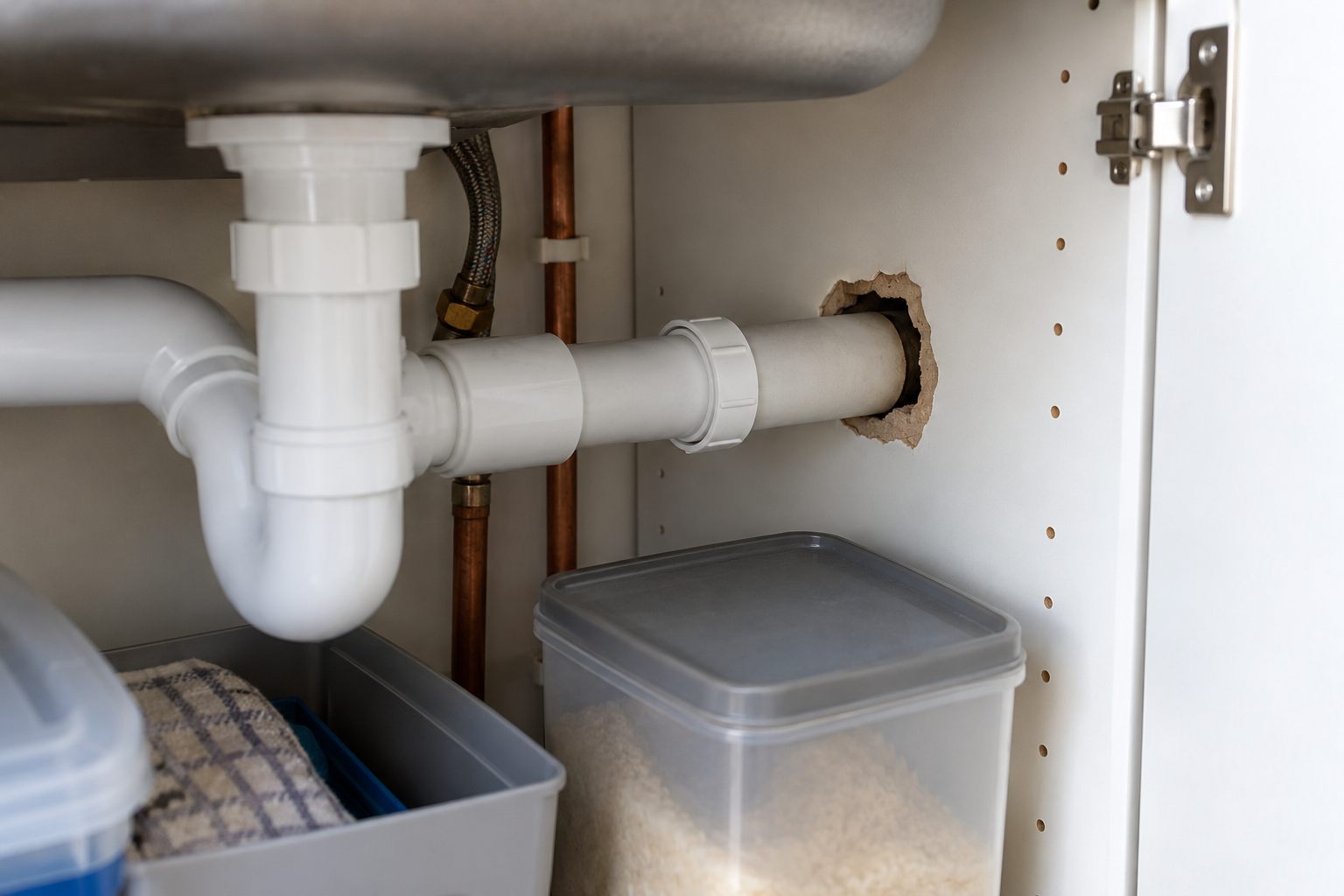
Once the immediate food issue is controlled, inspect only areas you can reach safely. Check the visible space under the sink, the edges of accessible cupboard bases and the floor beside appliances. A photograph of a gap around a pipe can be useful when discussing an inspection. Do not remove electrical covers, move a heavy cooker alone or put a hand into an unseen opening.
An opening is a clue, not proof that it is the entry point. A mouse may travel behind units before appearing somewhere else. The BPCA notes that very small gaps can be used by mice. A thorough assessment should consider the outside of the property as well as the kitchen, particularly service penetrations and places where building materials meet.
It is tempting to seal every visible gap immediately. If animals are active behind fitted units, blocking the obvious opening without understanding the route can move activity to another part of the property. Ask about the timing of proofing as part of a mouse control inspection in Uxbridge. The proposed work should explain what evidence supports the entry point and what can be safely sealed.
Distinguish mice from other possible problems
A few pellets do not always settle the identification. Rat droppings are generally larger, but individual marks can vary and photographs may distort scale. Noises behind a wall can also travel from another room or floor. A specialist will weigh the droppings alongside gnaw marks, footprints, access routes and where the signs occur. If there is evidence outdoors, in a drain area or around bins, mention that too; it may change the scope of the investigation.
The site’s rat control service explains why external access, waste storage and drainage can matter. You do not need to make the species decision before contacting someone. A useful description is simply where you found the signs and what else has changed.
Make the next visit more useful
Before arranging an inspection, make a short record of the rooms affected, the earliest date you noticed activity and any recent changes to the property. Note plumbing work, deliveries, moved furniture or a long period when the kitchen was unused. Mention if the room is part of a flat or a shared building, and whether access to neighbouring spaces needs arranging. This helps the inspection focus on possible connections without assuming the cause.
Keep photographs on your phone and describe any food you had to discard. If you have already used a product or placed a trap, say what it was and where it is. Do not add another treatment over an area you cannot inspect. Ask what the visit will cover, what preparation is needed and how follow-up signs should be recorded.
For a rented home, tell the person responsible for the property as early as practical and keep a dated copy of your report. Access to shared voids or repairs around pipework may require their involvement. In a block of flats, an inspection may need to consider connected spaces rather than treating one cupboard as an isolated problem.
If activity continues after cleaning, fresh marks appear near food or the route is hidden behind fitted units, a professional assessment is a reasonable next step. The Uxbridge pest control team can discuss the evidence, access and suitable appointment options. A clear record and a few well-framed photographs will make that conversation much more useful than a guess about how many mice there may be.